Scoop
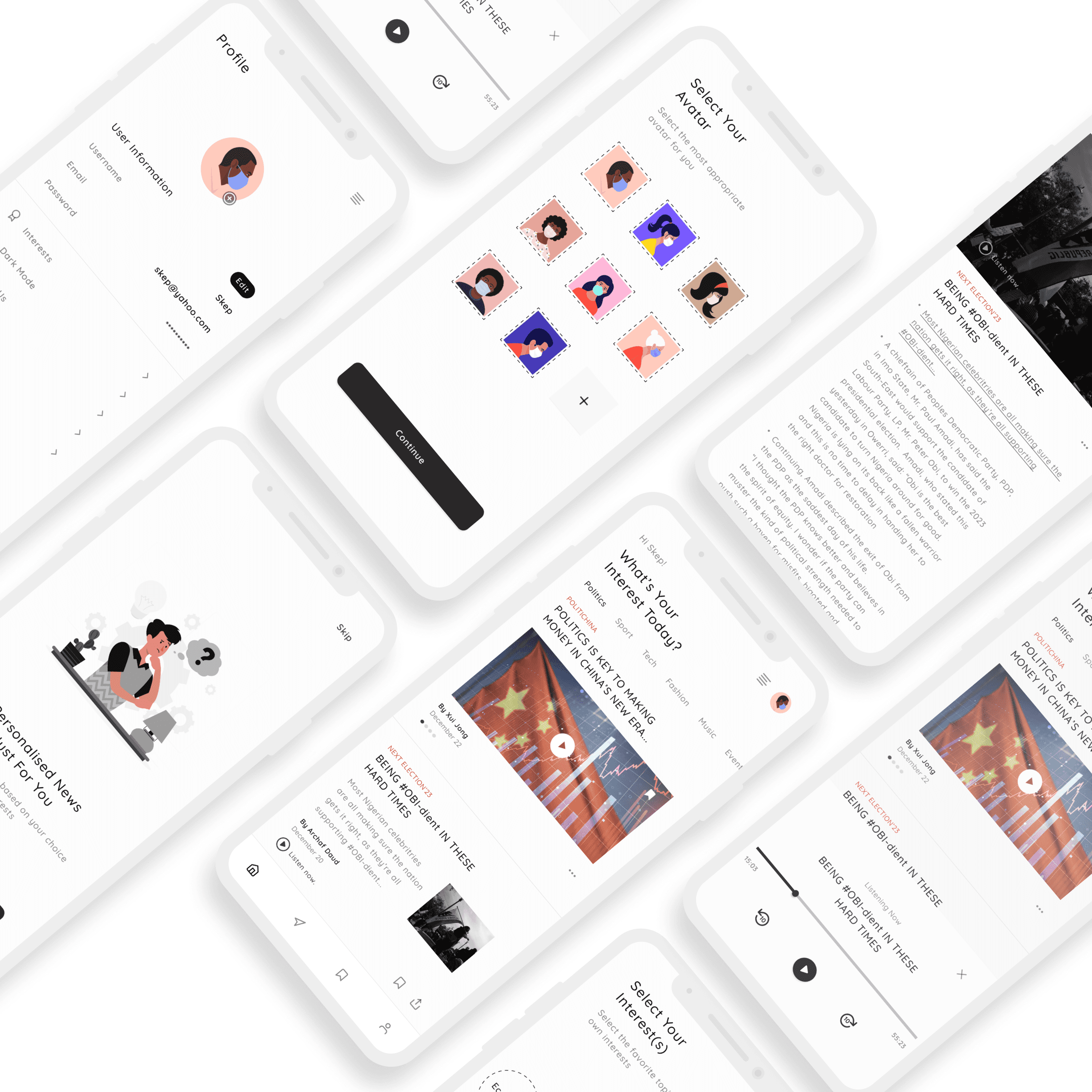
Overview:
Scoop is a mobile app, it serves its users up-to-date global news or happenings (visually & auditorily) based on
the users’ interests. This app updates its users with newly received or up-to-date global happenings
(visually & auditorily) based on the users’ interests. This app is top-notch and reliable in distributing information
about current events so as to inform and educate its users (readers & listeners).
Overview:
Scoop is a mobile app, it serves its users up-to-date
global news or happenings (visually & auditorily)
based on the users’ interests. This app updates its
users with newly received or up-to-date global
happenings (visually & auditorily) based on the
users’ interests. This app is top-notch and reliable
in distributing information about current events so
as to inform and educate its users (readers &
listeners).
Role:
User Experience (UX) Designer
Team:
Fawaz Ojomu
(Solo)
Duration:
4 Weeks
Why Scoop:
Most YOUTHS do not listen to/read news, Why? Probably because they seem too busy, and feel reading newspapers
seem outdated. Although, there are other alternatives, such as social media, but these platforms do not really
specialize in updating people with news.
On the other hand, ADULTS are more interested in the news (unlike youths), but most of these adults do not really get
the news they crave. Why? Most (adults) are off social media platforms that distribute at least little news to users.
Also, most do not read newspapers, probably because some are illiterate and some are too busy to read.
Why Scoop:
Most YOUTHS do not listen to/read news, Why?
Probably because they seem too busy, and feel
reading newspapers seem outdated. Although,
there are other alternatives, such as social media,
but these platforms do not really specialize in
updating people with news.
On the other hand, ADULTS are more interested
in the news (unlike youths), but most of these
adults do not really get the news they crave.
Why? Most (adults) are off social media platforms
that distribute at least little news to users.
Also, most do not read newspapers, probably
because some are illiterate and some are too busy
to read.
Design Process:
Sometimes, my design process remains almost the same, while sometimes, there would be an entirely different design
process. It depends on whatever problem to be solved, and the kind of approach that fits, to solve the problems.
At this time, I went through the best-fit design steps before coming up with the results.
Initially, I tried to understand the product goals, then I made assumptions on how people consume news.
Afterwards, I made some research so as to verify my assumptions. Thereupon, I did analysis of the research made,
brainstormed on how to meet users’ goals (and product goals), then the design phase kicked off.
Design Process:
Sometimes, my design process remains almost the
same, while sometimes, there would be an entirely
different design process. It depends on whatever
problem to be solved, and the kind of approach
that fits, to solve the problems. At this time, I went
through the best-fit design steps before coming
up with the results.
Initially, I tried to understand the product goals,
then I made assumptions on how people consume
news. Afterwards, I made some research so as to
verify my assumptions. Thereupon, I did analysis
of the research made, brainstormed on how to
meet users’ goals (and product goals), then the
design phase kicked off.
Design Process
Understand
Assumptions
Research
Analysis
Design
Project Timeline:
The whole project took exactly 4 weeks to complete, from understanding the goals, to researching, to sorting for
analysis, to designing, and testing.
Project Timeline:
The whole project took exactly 4 weeks to
complete, from understanding the goals, to
researching, to sorting for analysis, to designing,
and testing.
Project Timeline
Week 1
Week 2
Week 3
Week 4
Understand
Assumptions
Research
Analysis: User Personas
Design: Userflow, Sketches, Style guide, Final UIs
Understanding the goals:
At this point, I listed out the product goals, and since I would also need to know users’ problems and goals, I would be
going through the research phase (for potential users), so as to know users’ goals and problems, then try meeting
the product goals and users’ goals at the same time. Killing two birds with a stone :)
Here are the product goals:
1. Make people get more interested in consuming news.
2. News can be re-accessed, even after some period of time.
3. Convenient product for users, audio can be listened to, instead of read-only.
4. Ability to detach one’s distastes (of news).
Understanding the goals:
At this point, I listed out the product goals, and
since I would also need to know users’ problems
and goals, I would be going through the research
phase (for potential users), so as to know users’
goals and problems, then try meeting the
product goals and users’ goals at the same time.
Killing two birds with a stone :)
Here are the product goals:
1. Make people get more interested in consuming
news.
2. News can be re-accessed, even after some
period of time.
3. Convenient product for users, audio can be
listened to, instead of read-only.
4. Ability to detach one’s distastes (of news).
Product
goals
Users
goals
UX
Balancing the goals
Assumptions:
I would say this is a new segment in my design thinking process because it has never happened before.
At this phase, I decided to disregard research initially, then went through thorough reasoning based on the project
overview, and I started putting down some theories.
My Assumptions: Newspapers and social media are the most popular ways of getting news, and the below statistics
show my assumptions on how people get news to them.
First Summary:
1. 85 percent of YOUTHS that are interested in the news get them through SOCIAL MEDIA.
2. 65 percent of ADULTS that are interested in the news get them through SOCIAL MEDIA.
Second Summary:
1. 35 percent of ADULTS that are interested in the news get them through NEWSPAPERS.
2. 15 percent of YOUTHS that are interested in the news get them through NEWSPAPERS.
Assumptions:
I would say this is a new segment in my design
thinking process because it has never happened
before. At this phase, I decided to disregard
research initially, then went through thorough
reasoning based on the project overview, and
I started putting down some theories.
My Assumptions: Newspapers and social media
are the most popular ways of getting news, and
the below statistics show my assumptions on
how people get news to them.
First Summary:
1. 85 percent of YOUTHS that are interested in
the news get them through SOCIAL MEDIA.
2. 65 percent of ADULTS that are interested in
the news get them through SOCIAL MEDIA.
Second Summary:
1. 35 percent of ADULTS that are interested in
the news get them through NEWSPAPERS.
2. 15 percent of YOUTHS that are interested in
the news get them through NEWSPAPERS.
Assumptions
65%

Social media:
85%

Social media:
35%
Newspaper:
15%
Newspaper:
Initial Research:
After the assumption phase, I started making real findings, just to get a few views about news’ consumers (users).
Since the users are both ADULTS and YOUTHS, I conducted interviews with a few people (5 youths & 5 adults).
Before the interviews, I went on to peruse the internet to digest some certainties about news, news consumers,
news publications, and whatnot. I discovered from my research some authentic depictions that seem to contradict
my assumptions, so I took them into consideration:
Initial Research:
After the assumption phase, I started making real
findings, just to get a few views about news’
consumers (users). Since the users are both
ADULTS and YOUTHS, I conducted interviews with
a few people (5 youths & 5 adults). Before the
interviews, I went on to peruse the internet to
digest some certainties about news, news
consumers, news publications, and whatnot.
I discovered from my research some authentic
depictions that seem to contradict my assumptions,
so I took them into consideration:
Perusing the internet
Source: PEW RESEARCH CENTER
Source: PEW RESEARCH CENTER
Reading
Reading
27%
27%
29%
29%
40%
40%
42%
42%
Watching
Watching
10%
10%
17%
17%
20%
20%
19%
19%
Listening
Listening
58%
58%
52%
52%
39%
39%
38%
38%
Aged 65+:
Aged 65+:
Aged 50-64:
Aged 50-64:
Aged 30-49:
Aged 30-49:
Aged 18-29:
Aged 18-29:
Final Research:
As aforementioned in the initial research phase, since the users are both ADULTS and YOUTHS, I conducted interviews
with a few people (5 youths & 5 adults). Afterwards, I documented some effective information I acquired from the
research I conducted and here it is below:
Final Research:
As aforementioned in the initial research phase,
since the users are both ADULTS and YOUTHS,
I conducted interviews with a few people
(5 youths & 5 adults). Afterwards, I documented
some effective information I acquired from the
research I conducted and here it is below:
Interview Insight
0/5 of the YOUTHS prefer to get
news from Newspapers
0/5 of the YOUTHS prefer to get
news from Newspapers
1/5 of the YOUTHS prefer to get
news from Television
1/5 of the YOUTHS prefer to get
news from Television
4/5 of the YOUTHS prefer to get
news from Social media
4/5 of the YOUTHS prefer to get
news from Social media
1/5 of the ADULTS prefer to get
news from Newspapers
1/5 of the ADULTS prefer to get
news from Newspapers
1/5 of the ADULTS prefer to get
news from Television
1/5 of the ADULTS prefer to get
news from Television
0/5 of the YOUTHS prefer to get
news from Radio
0/5 of the YOUTHS prefer to get
news from Radio
1/5 of the ADULTS prefer to get
news from Radio
1/5 of the ADULTS prefer to get
news from Radio
2/5 of the ADULTS prefer to get
news from Social media
2/5 of the ADULTS prefer to get
news from Social media
Defining users' goals:
At this phase, I decided to put down a few users’ information (e.g users’ bio, pain points, goals, etc.) I was able to get
from the research. Afterward, I set out two user personas that represent enough the users’ pain points and goals,
then one could say the design decisions were justified.
Note that: I gave them a brief summary about Scoop at first, before the interview/discussion started.
At the end, I asked them additional questions about the features they’d like to see in Scoop, and I received logical
responses.
Defining users' goals:
At this phase, I decided to put down a few users’
information (e.g users’ bio, pain points, goals, etc.)
I was able to get from the research. Afterward,
I set out two user personas that represent enough
the users’ pain points and goals, then one could say
the design decisions were justified.
Note that: I gave them a brief summary about Scoop
at first, before the interview/discussion started.
At the end, I asked them additional questions about
the features they’d like to see in Scoop, and
I received logical responses.

Linda is 24 years old, obviously a youth. She stays in Lagos, Nigeria. She bake cakes for a living. She visits her
friends 3-4 times monthly, and they do talk about new happenings all over the world. She doesn’t want to be
sidelined while her friends are discussing about new trends.
Linda is 24 years old, obviously a youth. She stays in Lagos, Nigeria.
She bake cakes for a living. She visits her friends 3-4 times monthly,
and they do talk about new happenings all over the world.
She doesn’t want to be sidelined while her friends are discussing
about new trends.
Linda Barbara
Linda Barbara
-Doesn’t like reading
-Always busy in the day, only free at nights
-Doesn’t like reading
-Always busy in the day, only free at nights
Weaknesses
Weaknesses
-Linda wants to be updated, and also interact in fashion trends discussions
-Linda wants to share and discuss topics with her family and friends through social media
-Linda wants to aware of new captivating and discussable topics
-Linda wants to get only the news of her interest
-Linda wants to be updated, and also interact in fashion trends
discussions
-Linda wants to share and discuss topics with her family and
friends through social media
-Linda wants to aware of new captivating and discussable topics
-Linda wants to get only the news of her interest
Goals
Goals
-Doesn’t have time to consume (by reading and listening) news sometimes, because of work
-Tired of reading sometimes, and always very busy to read
-Doesn’t have time to consume (by reading and listening) news
sometimes, because of work
-Tired of reading sometimes, and always very busy to read
-John wants to get more politics news
-John wants to save news for later reading
-John wants to watch or/and listen news on his mobile phone
-John wants to bookmark news for later purpose.
- John wants political awareness
-John wants to get more politics news
-John wants to save news for later reading
-John wants to watch or/and listen news on his mobile phone
-John wants to bookmark news for later purpose.
- John wants political awareness
Weaknesses
Weaknesses
Goals
Goals
John Beckham
John Beckham
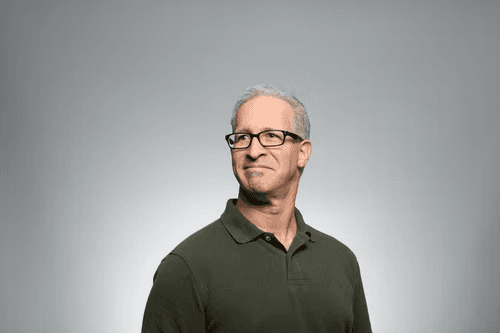
John is a 60 year old software engineer. In his spare time, he read books, news publications, and watches television.
He has great interest in politics, as he was his department president when he was at school.
John is a 60 year old software engineer. In his spare time,
he read books, news publications, and watches television.
He has great interest in politics, as he was his department
president when he was at school.
Style Guide:
Settling color palettes for a style guide can be a bit daunting sometimes, so I decided to go for neutrals.
As for typography, it was easy to go for one.
Color Palettes
Typography
111010
Quicksand
Medium
10, 12, 13, 15, 20
FFFFFF
C91313
Design:
This is the stage I started designing problem-solving UIs that could solve the users’ problems and meet product goals
at the same time.
Design:
This is the stage I started designing problem-solving
UI that could solve the users’ problems and meet
product goals at the same time.
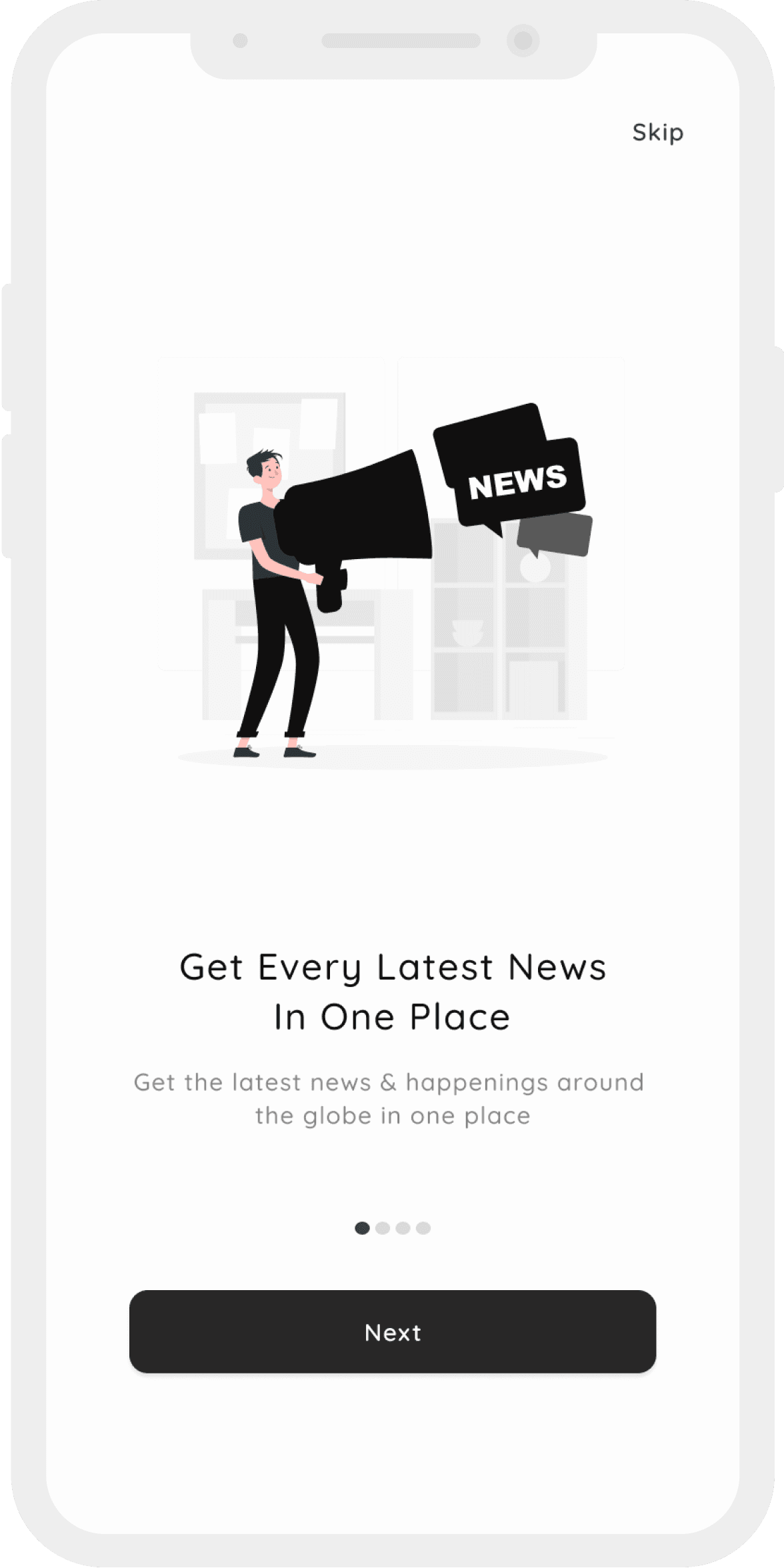
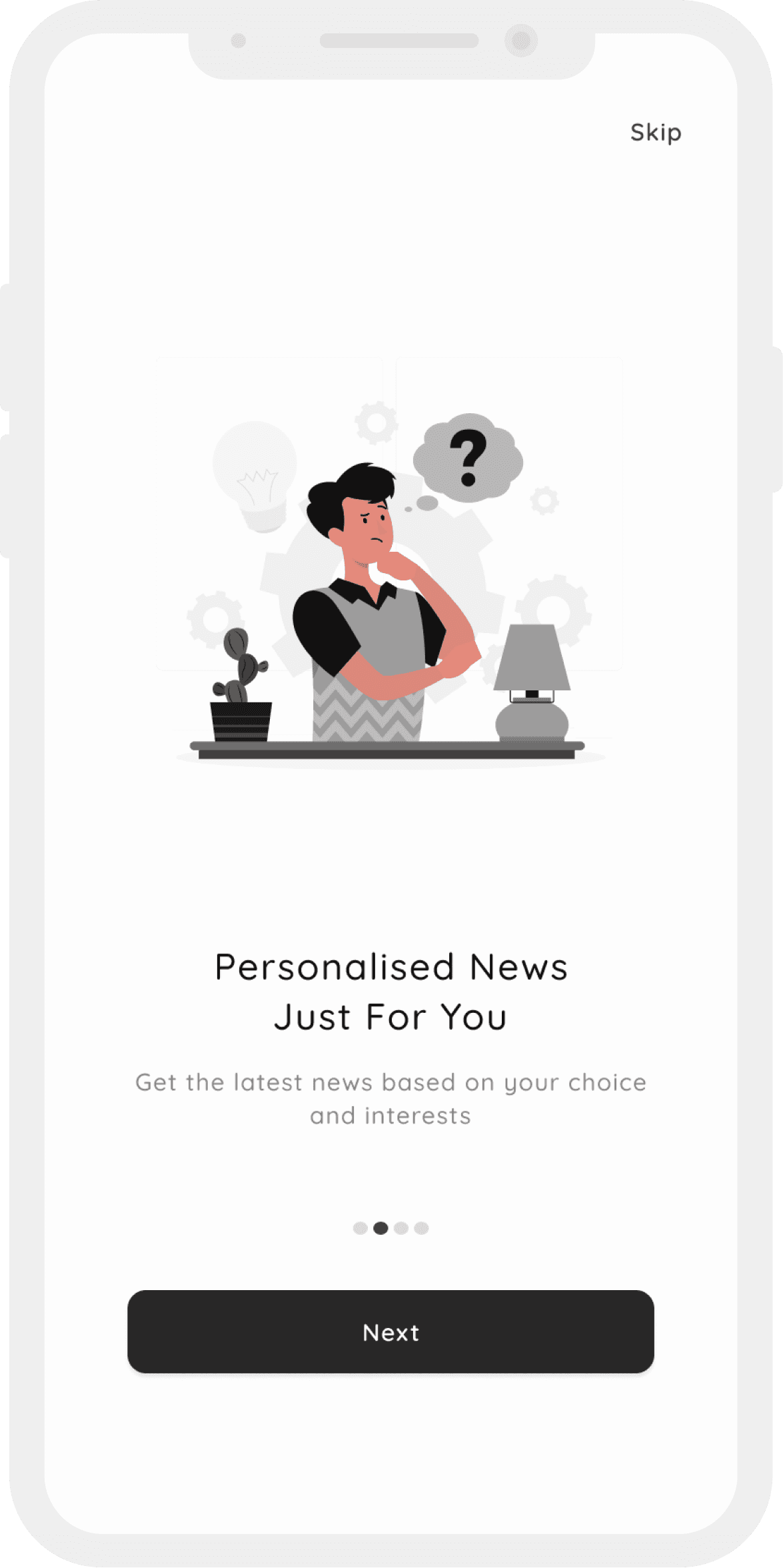
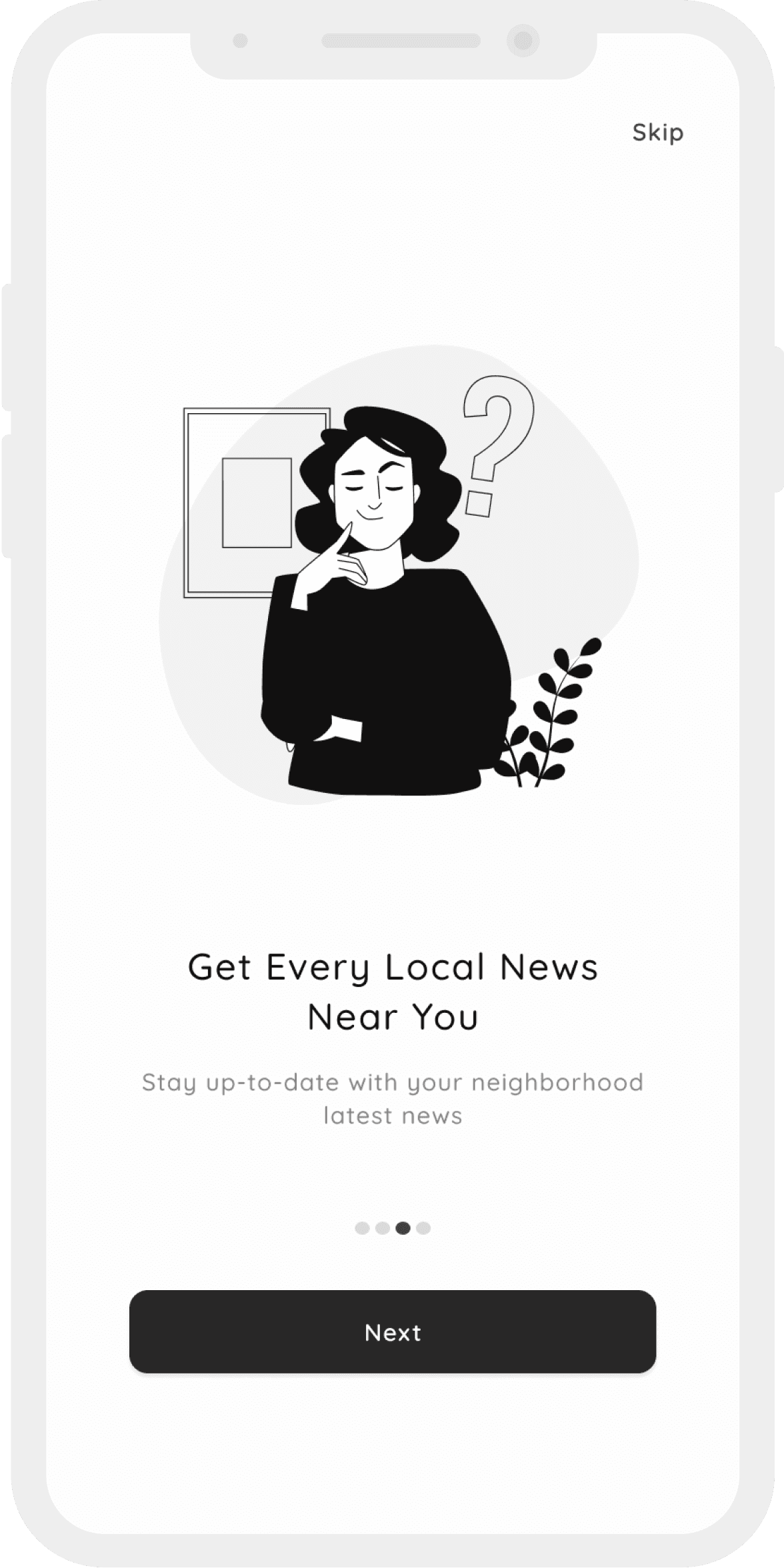
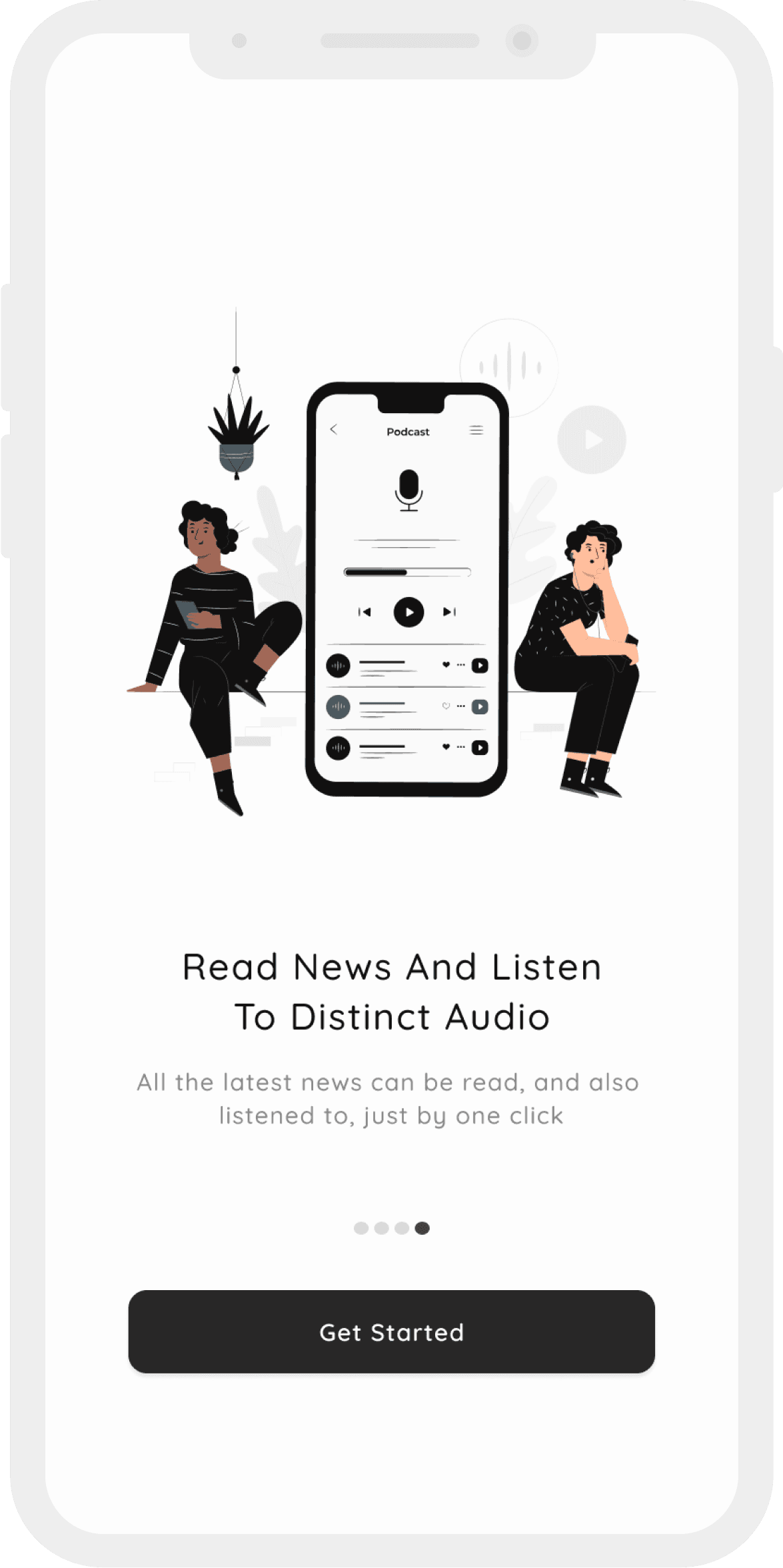
Splash screen & Onboarding:
The onboarding screens are made easy to use, and they also easily familiarize new users with the app. These screens
are initial walkthroughs that introduce the app to its new users. The screens can be easily skipped one at a time
or/and be skipped to the registration screens.
Splash screen & Onboarding:
The onboarding screens are made easy to use, and
they also easily familiarize new users with the app.
These screens are initial walkthroughs that
introduce the app to its new users. The screens
can be easily skipped one at a time or/and be
skipped to the registration screens.
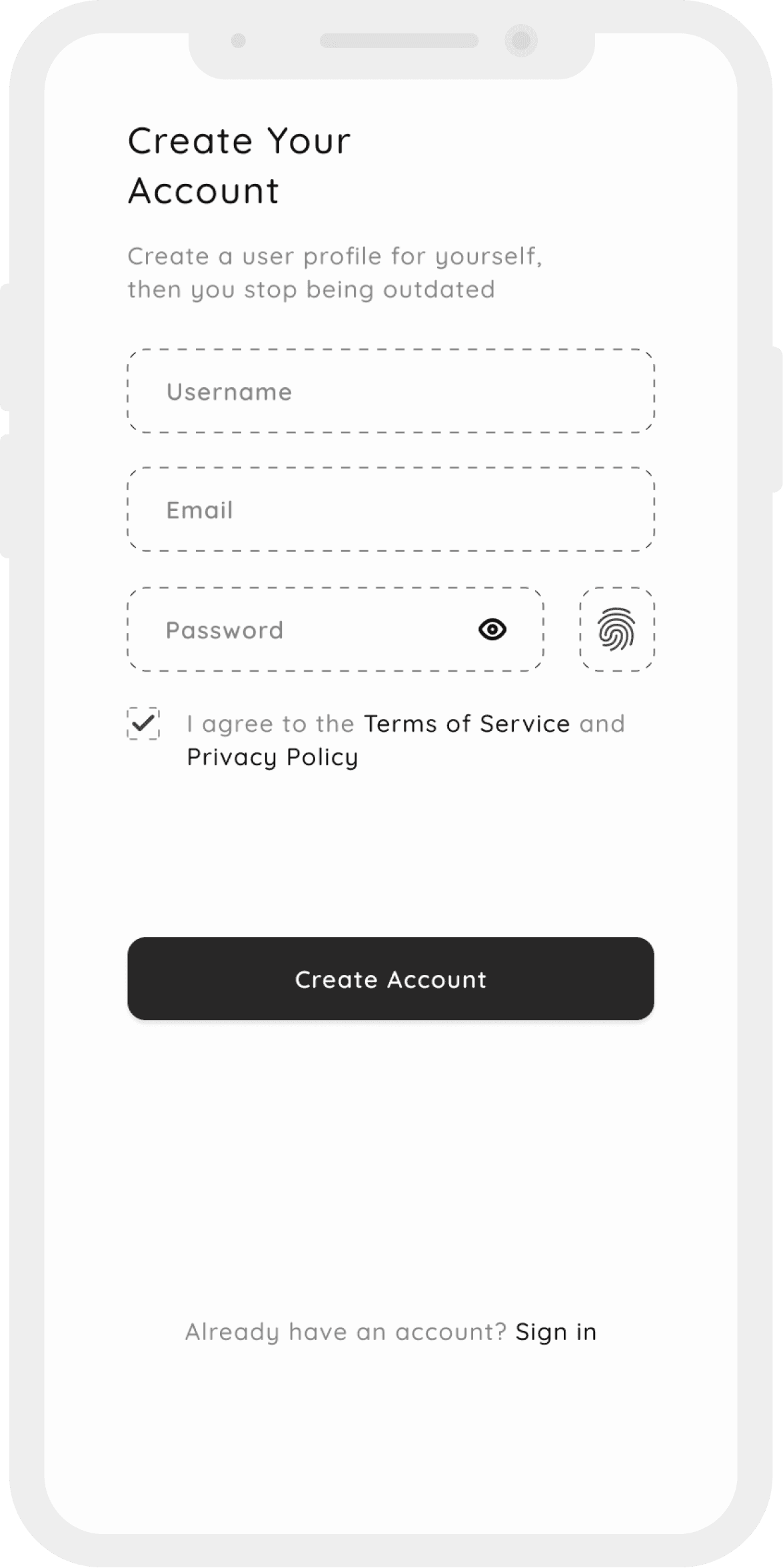
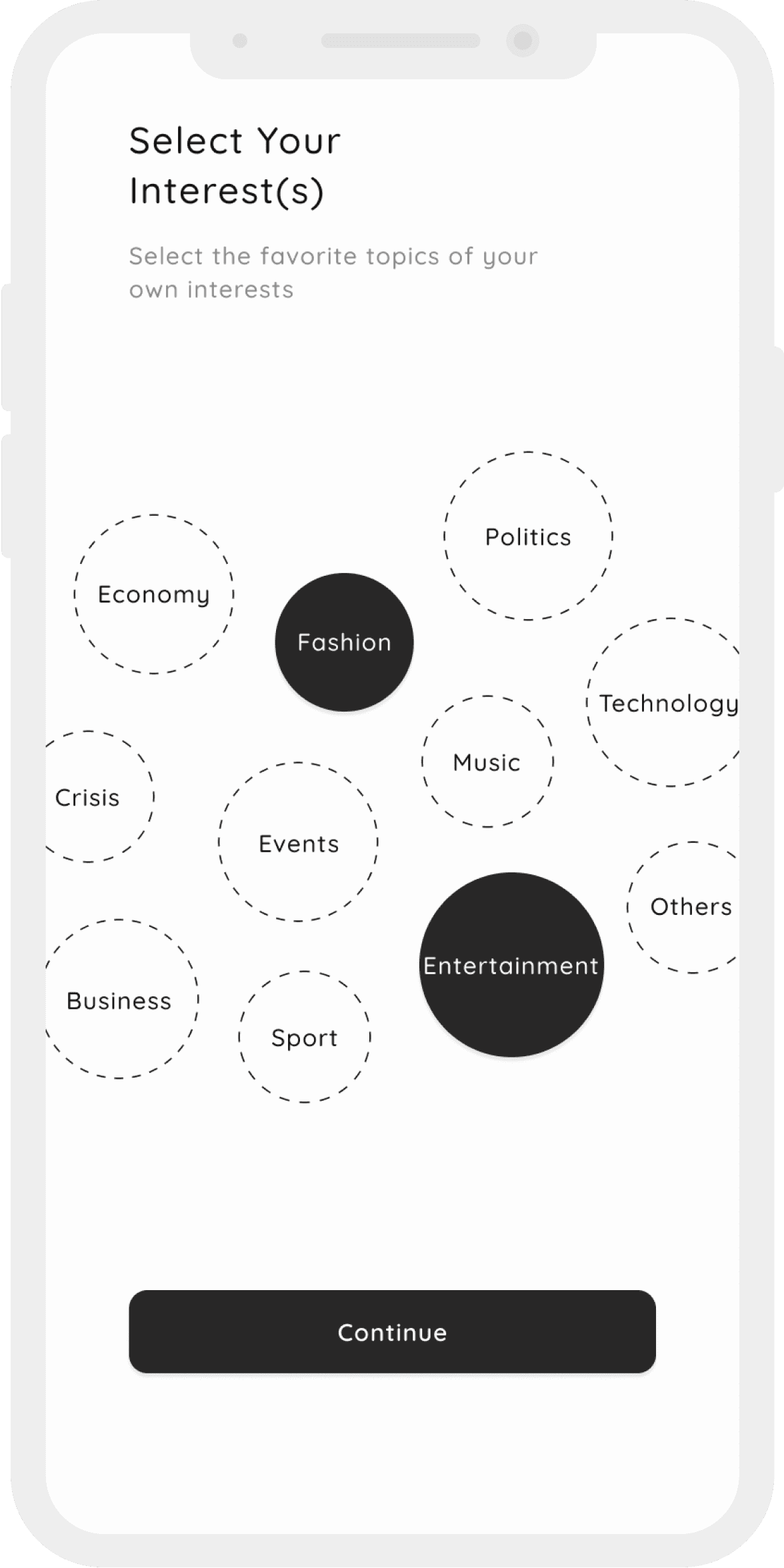
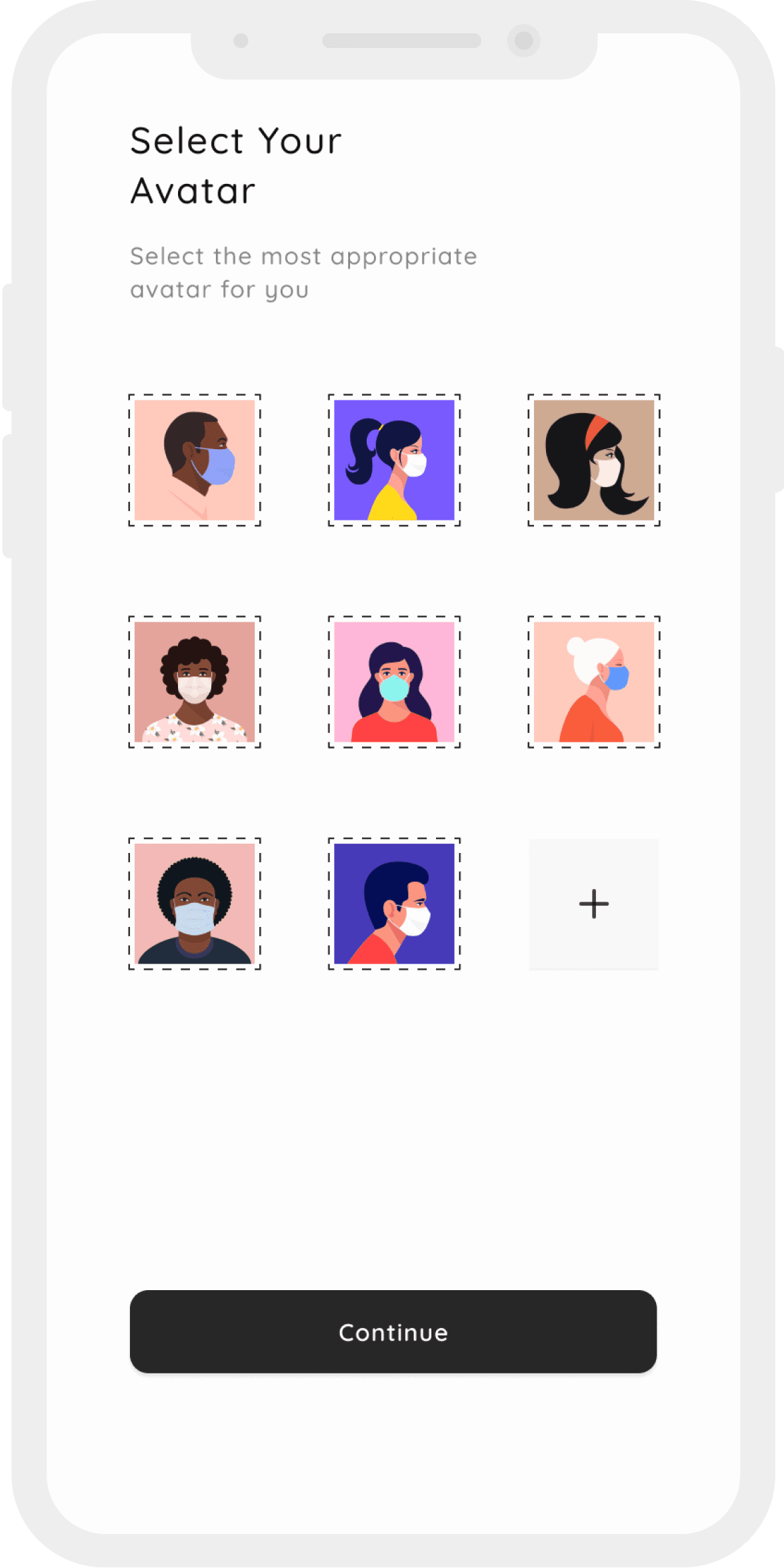
Registration & Selecting interest(s):
The registration screens are mainly for making entries into the app's main screens. Obviously, when an account is
being created by a potential user, the user would be having an account already enlisted, with their designated avatar,
and topics of interest which the user would be sighting first as soon as they check in again.
Registration & Selecting interest(s):
The registration screens are mainly for making
entries into the app's main screens. Obviously, when
an account is being created by a potential user, the
user would be having an account already enlisted,
with their designated avatar, and topics of interest
which the user would be sighting first as soon as
they check in again.
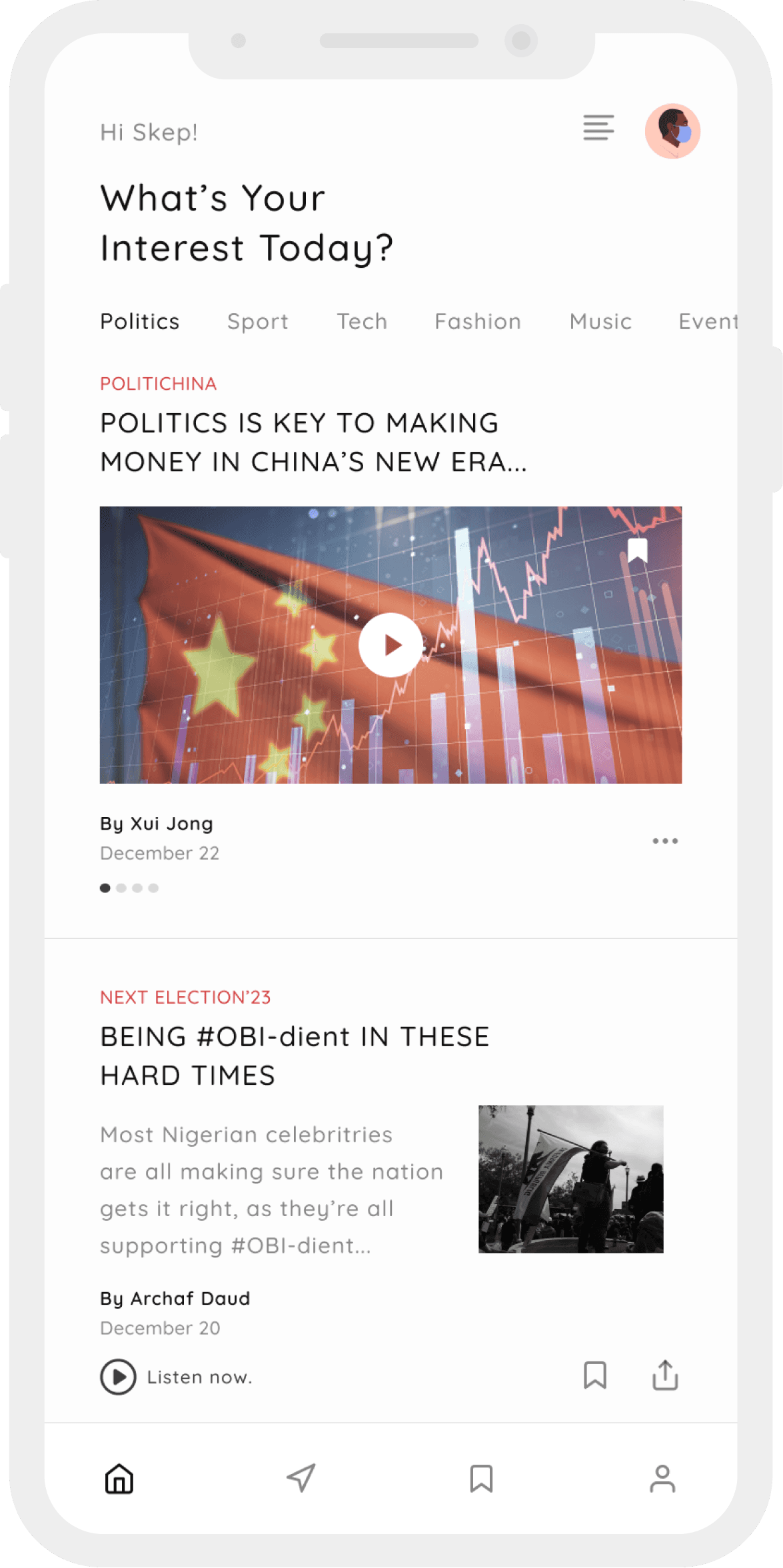
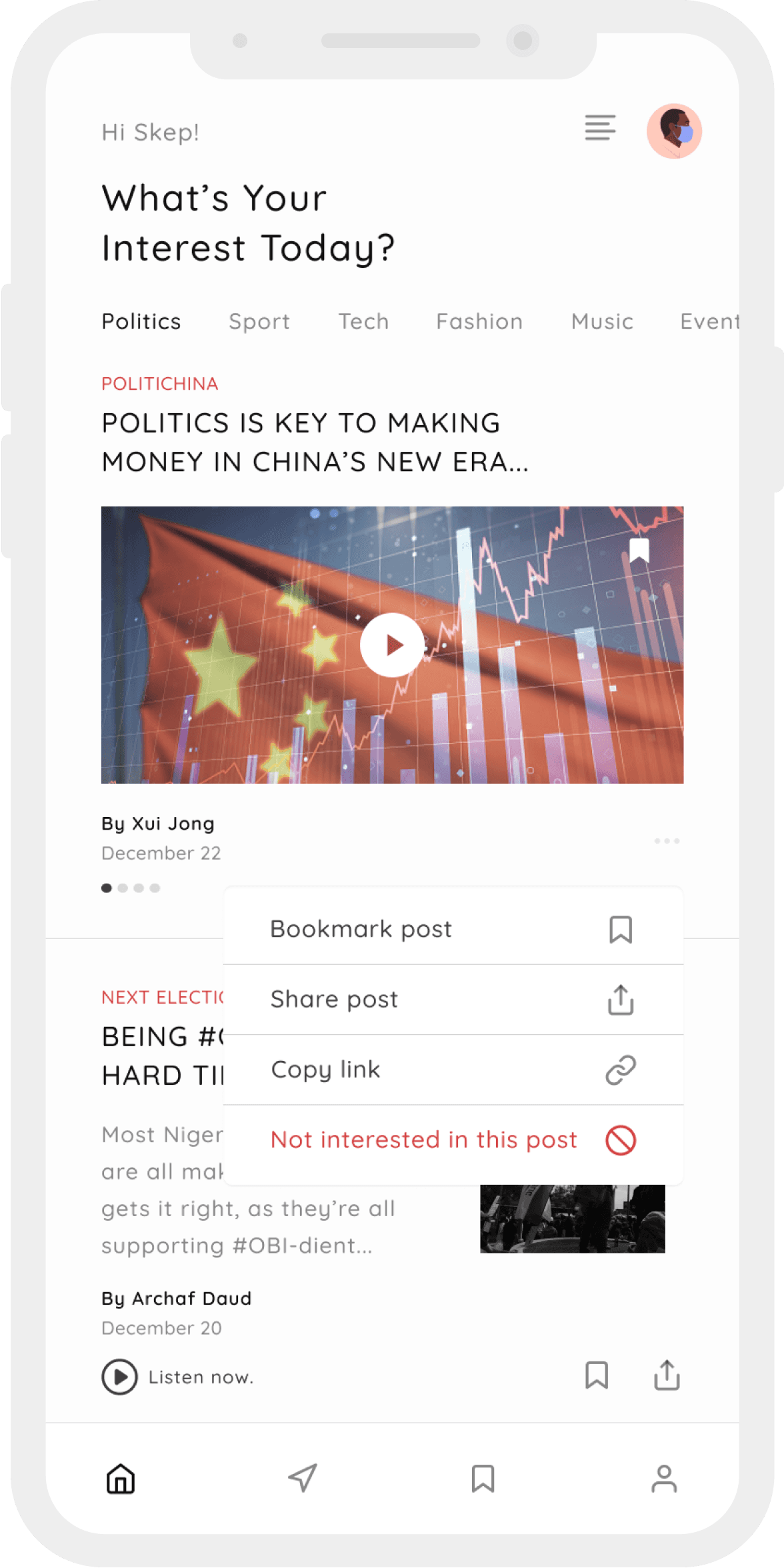
All-round home:
The home screen exhibits user-friendliness, it shows the user- avatar, and username. The screen also reminds its
user of their topics of interest and shows each post can be bookmarked for later references, shared on social media,
links can be copied, and so on.
All-round home:
The home screen exhibits user-friendliness, it shows
the user- avatar, and username. The screen also
reminds its user of their topics of interest and shows
each post can be bookmarked for later references,
shared on social media, links can be copied, and
so on.
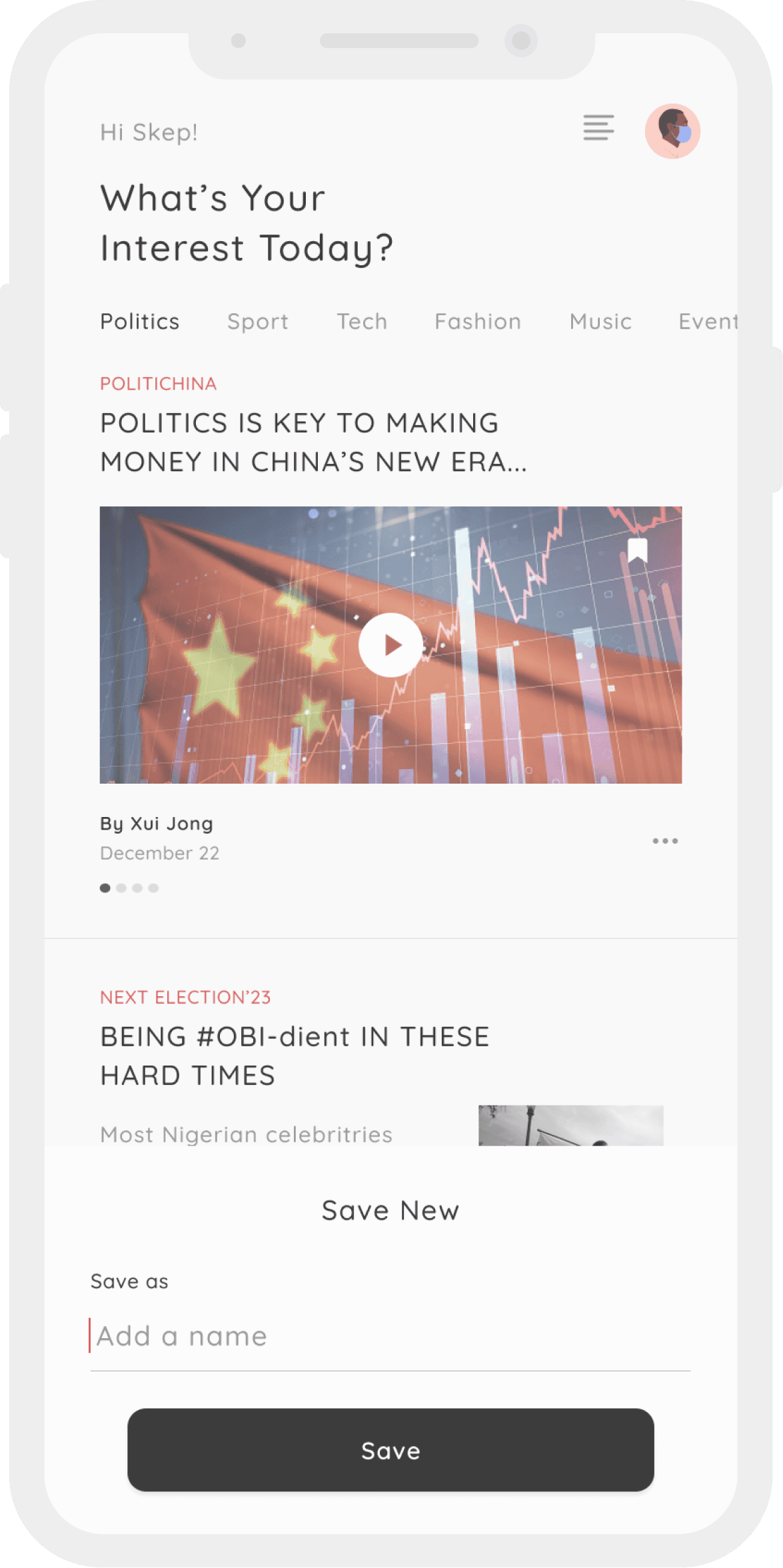
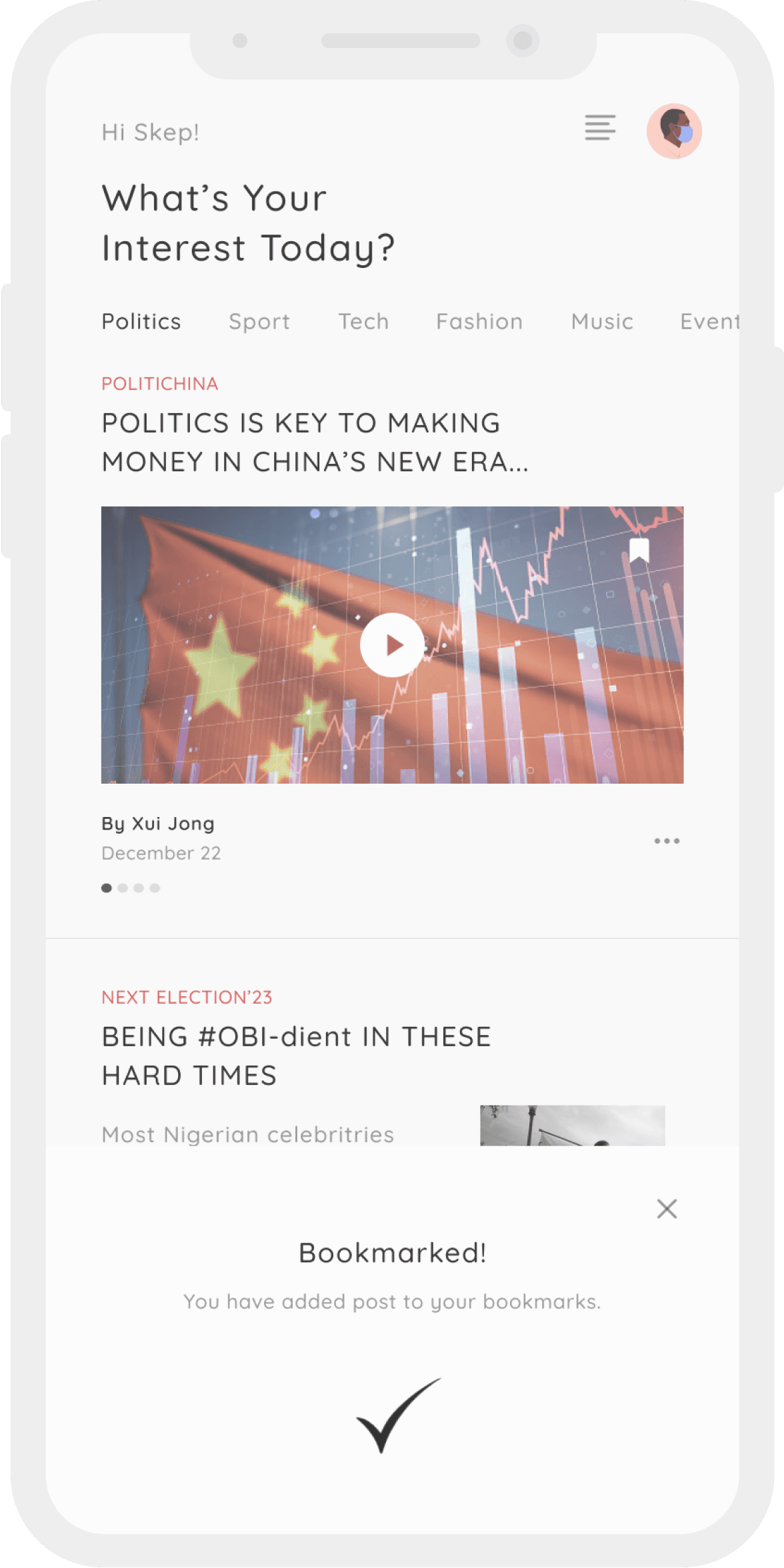
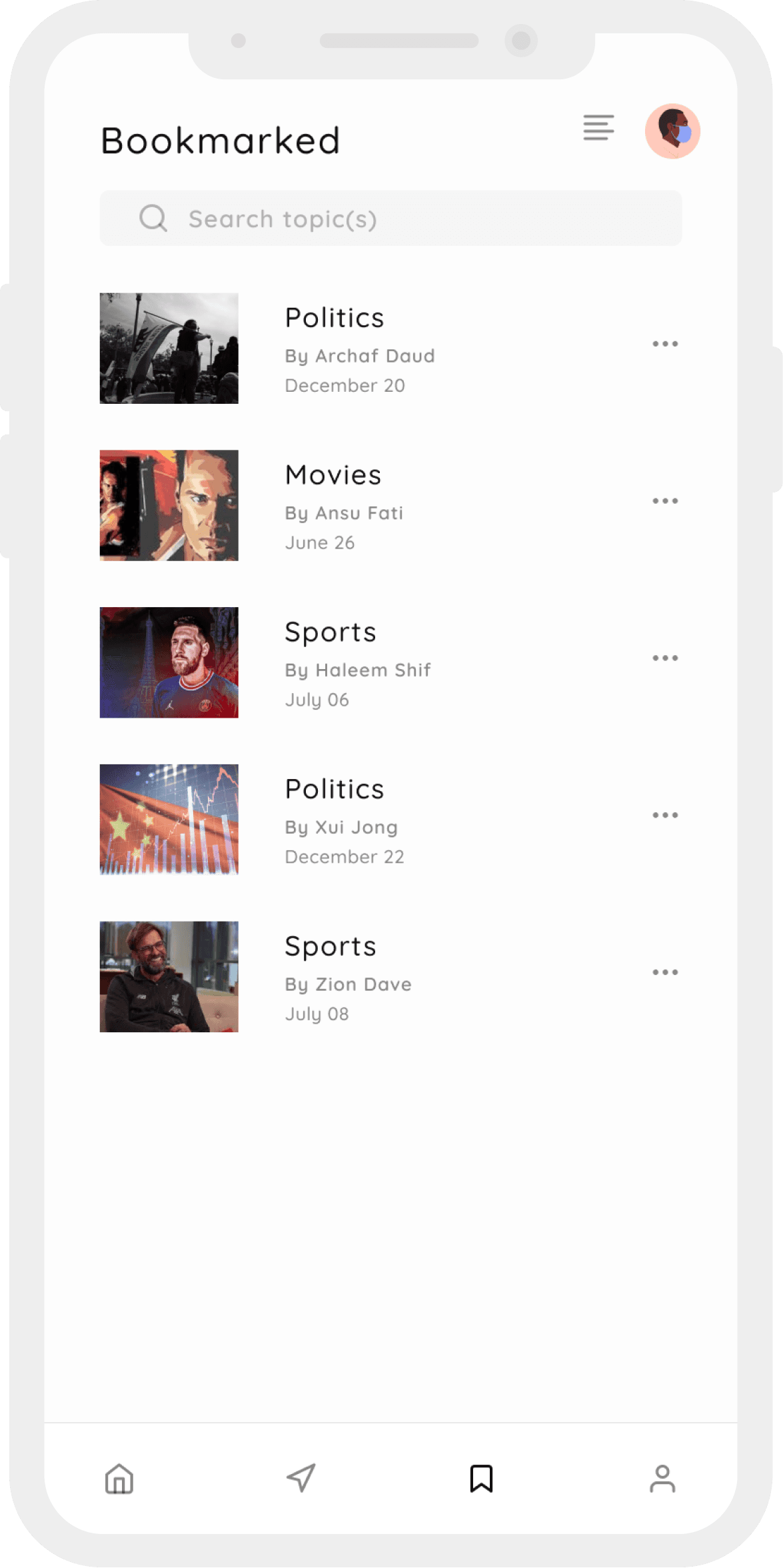
Bookmark feature:
As one of the product goals is news re-accessibility, the bookmark feature was considered too, so the users would be
able to save any post and go back to the post in the future.
Bookmark feature:
As one of the product goals is news re-accessibility,
the bookmark feature was considered too, so the
users would be able to save any post and go back
to the post in the future.
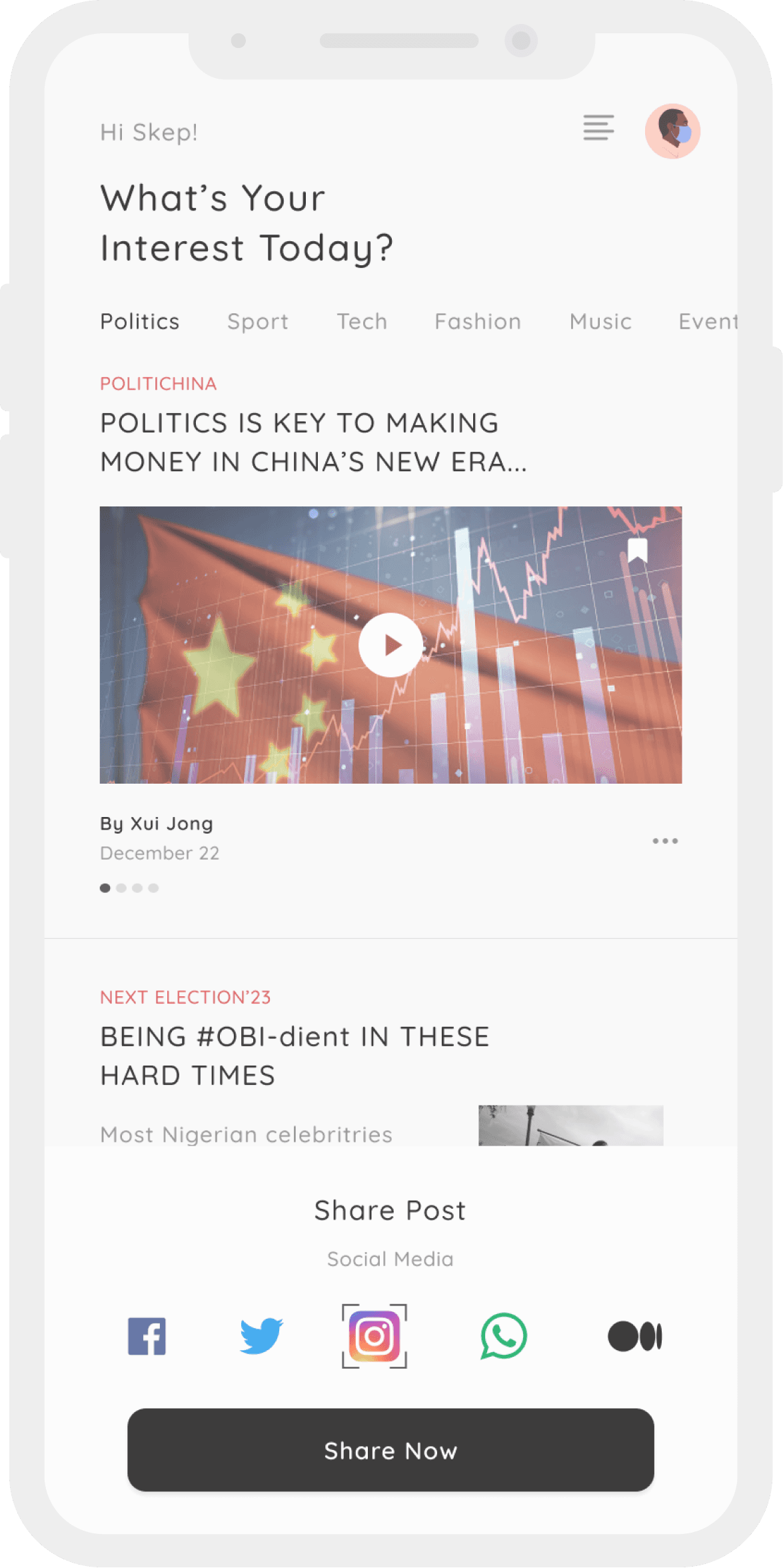
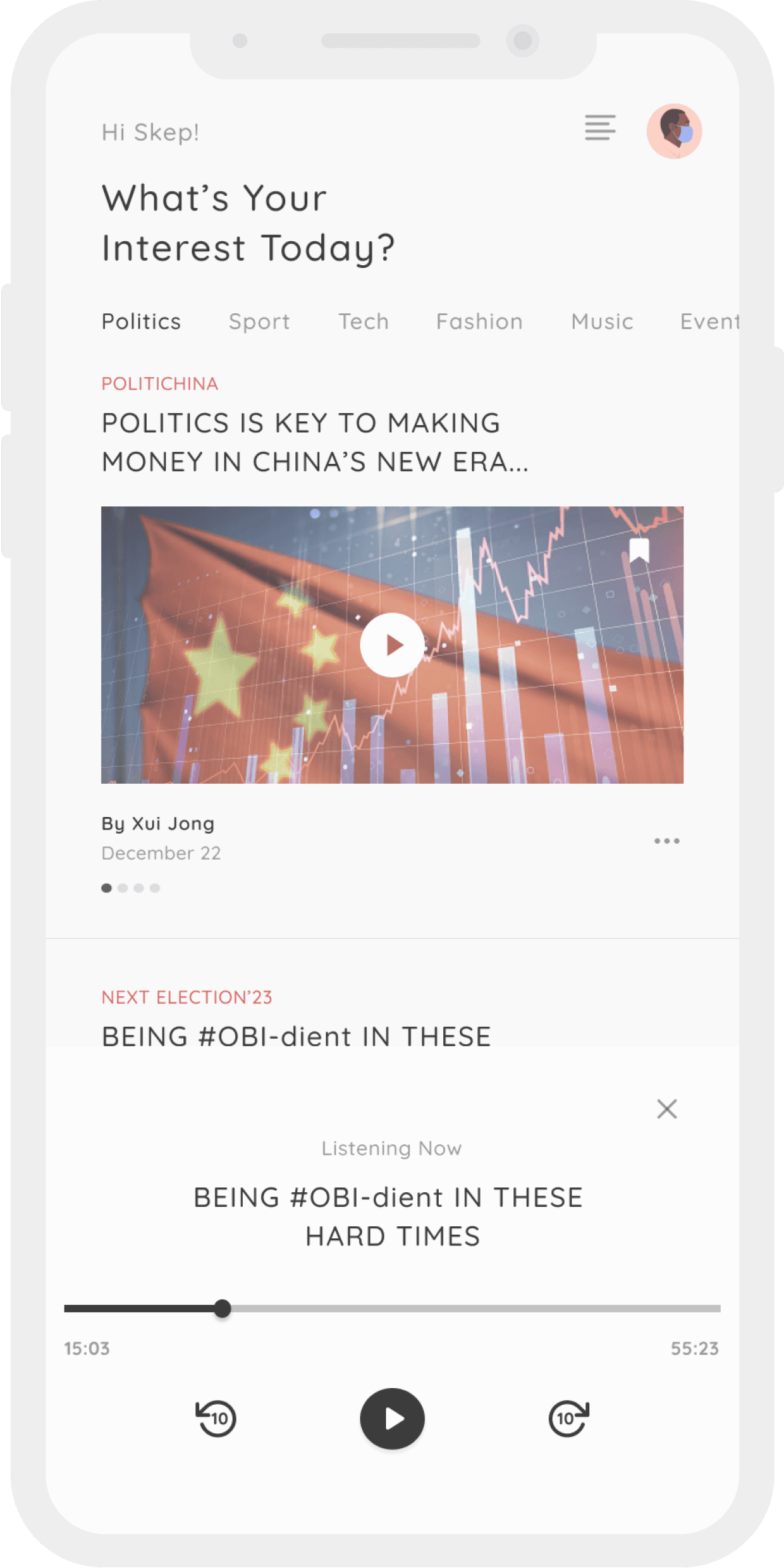
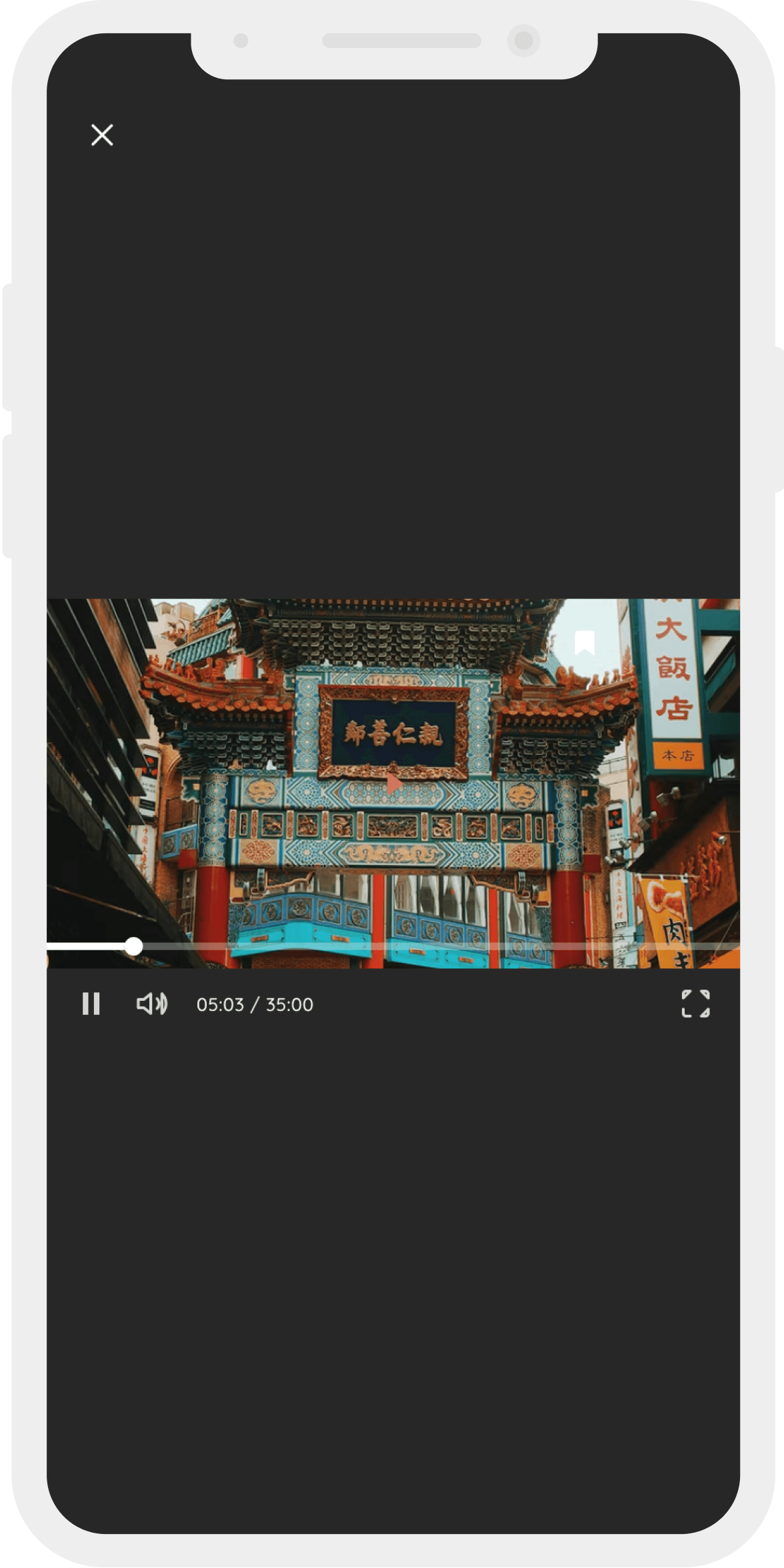
Meeting certain goals:
At this point, I tried meeting some of the users’ goal and product goal, as the users’ goal is the ability to share news
posts through other platforms while using the app, and one of the product goals is building a convenient product for
users (audio can be listened to, instead of always reading).
Meeting certain goals:
At this point, I tried meeting some of the users’
goal and product goal, as the users’ goal is the
ability to share news posts through other
platforms while using the app, and one of the
product goals is building a convenient product
for users (audio can be listened to, instead of
always reading).
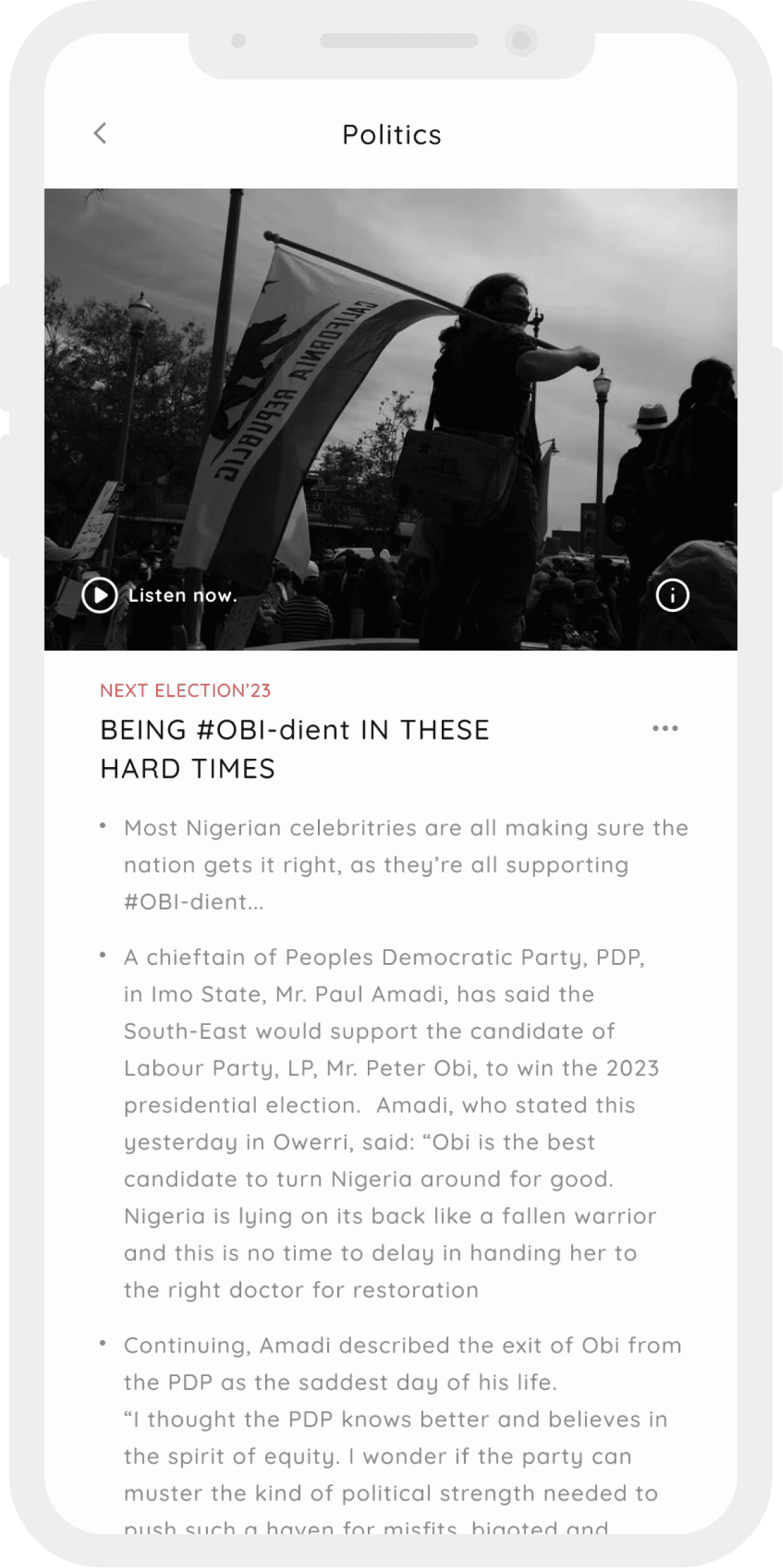
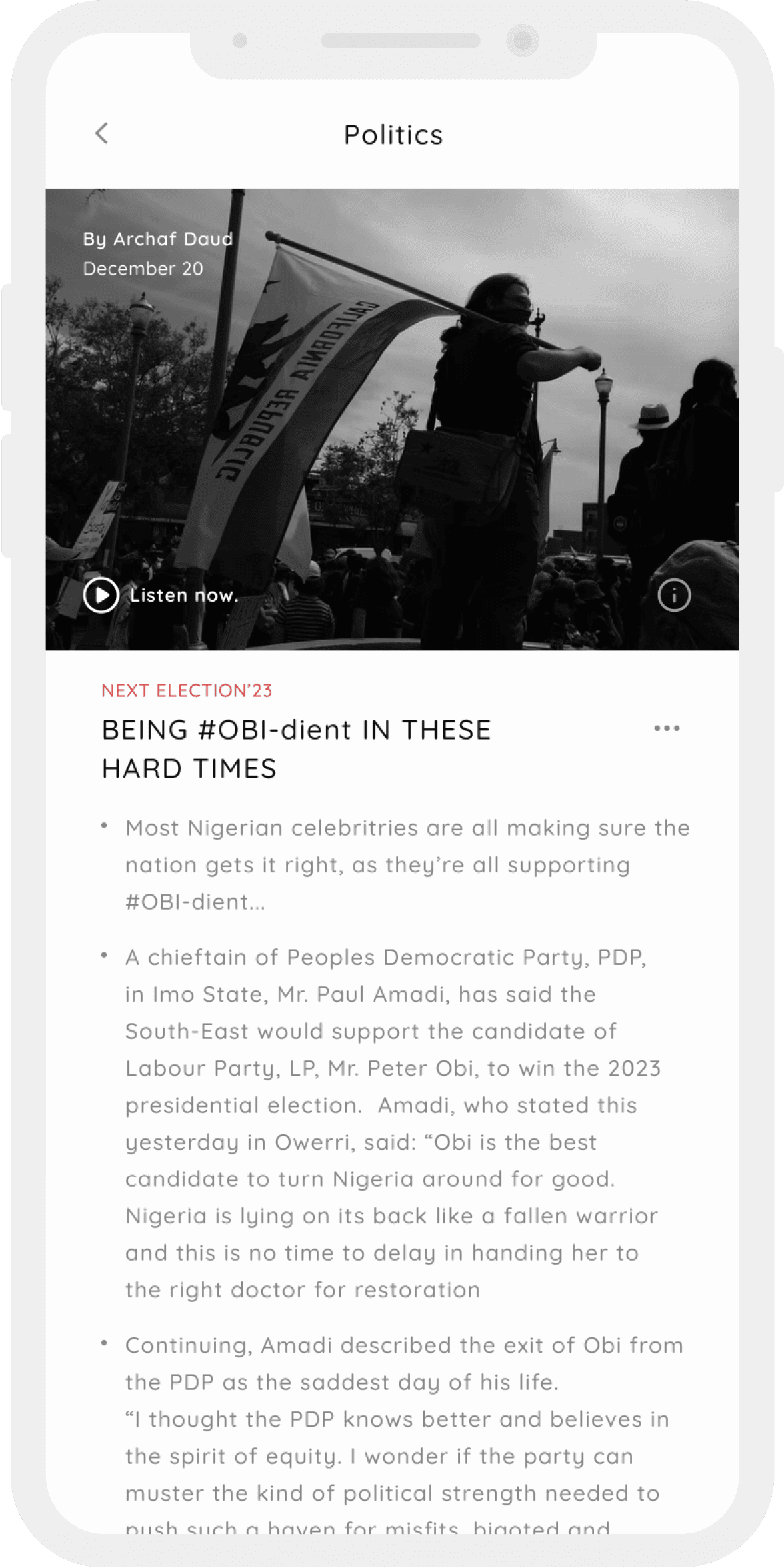
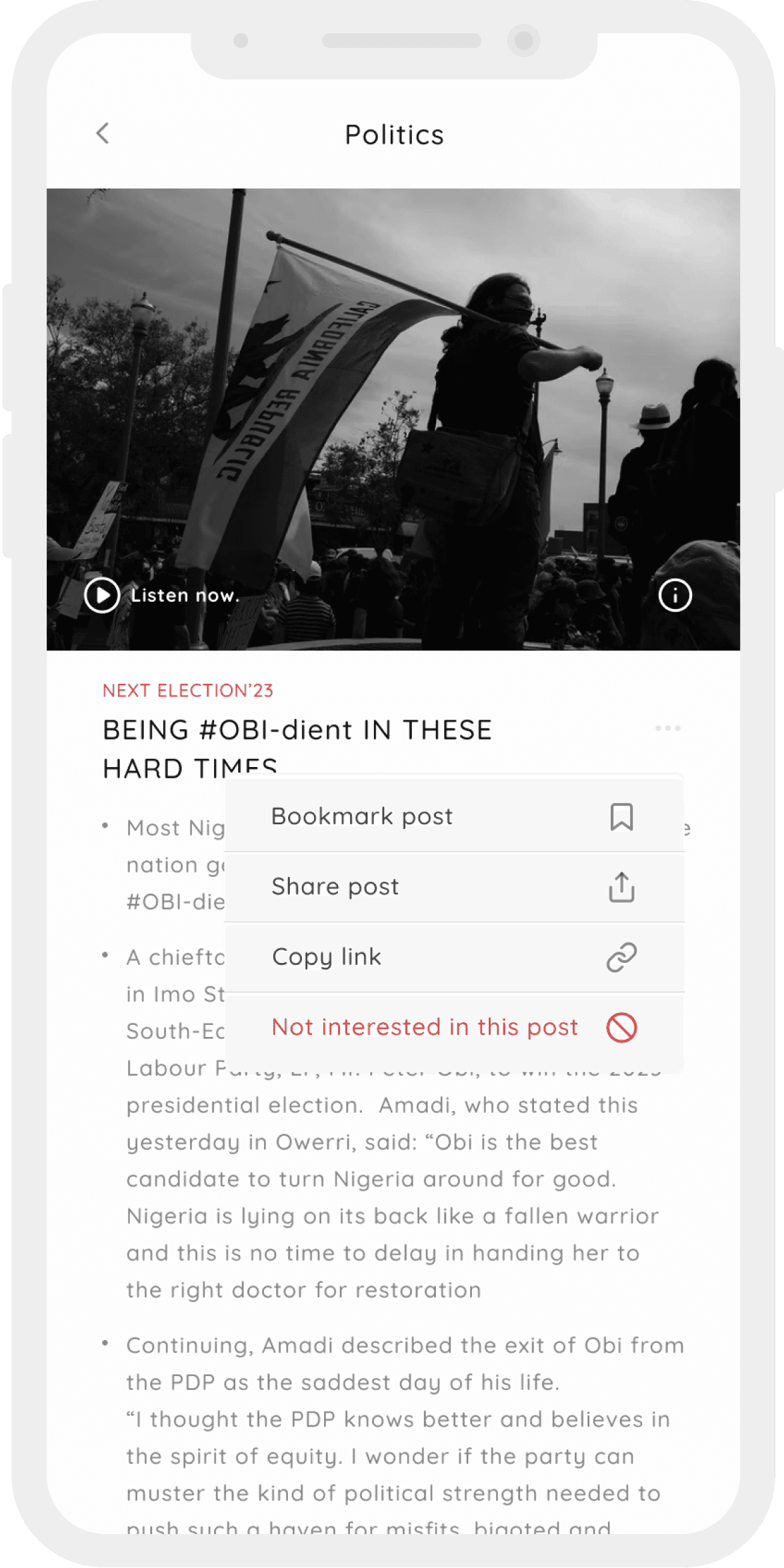
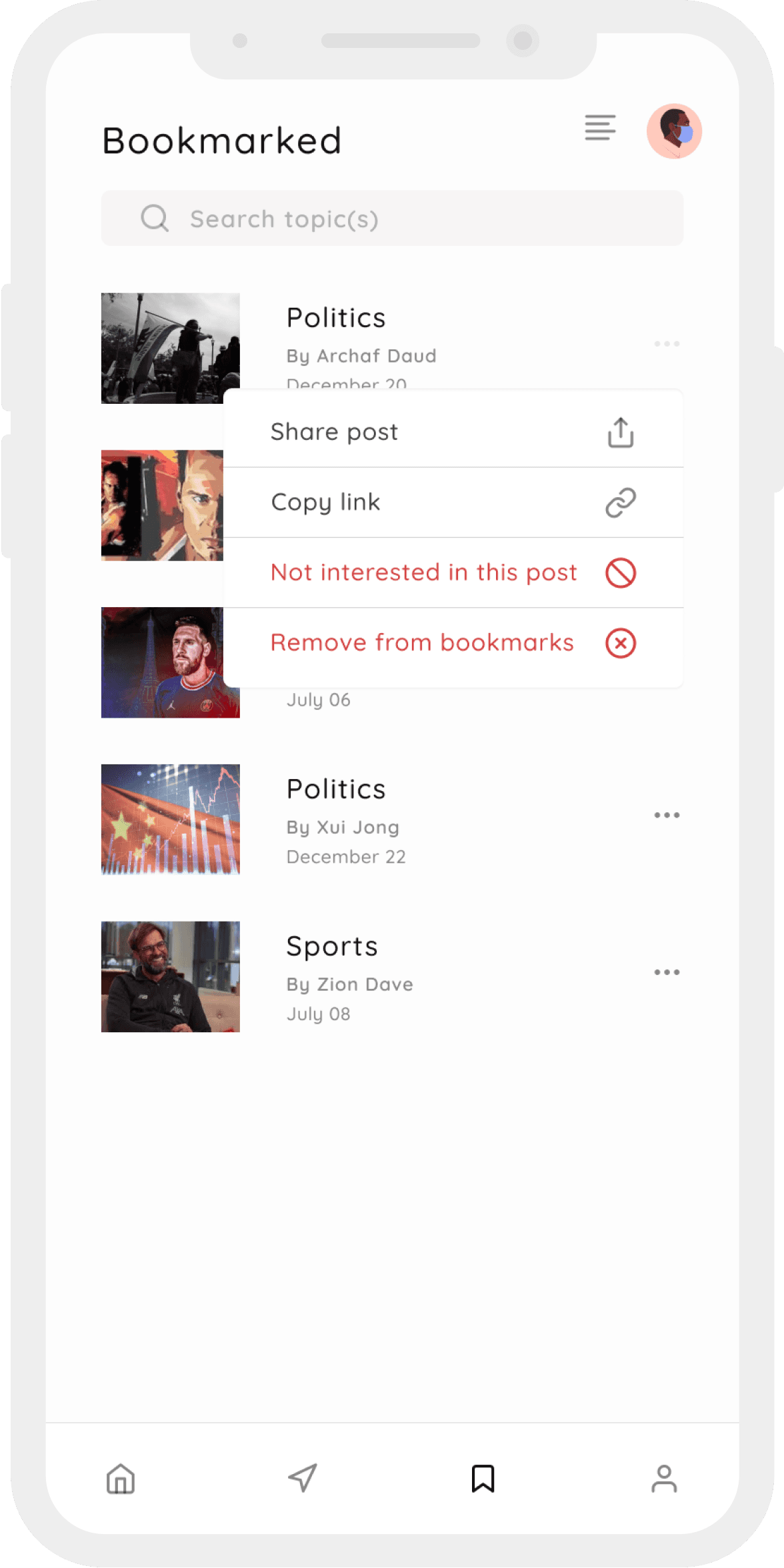
Easy readability:
Here, the screens show how easy to read a news post can be, also, one could get a few details about a news post
(e.g., News author’s name, publication date, etc.). It’s also feasible to get any post saved, shared, link copied, and
lastly, detached if one’s not interested in it.
Easy readability:
Here, the screens show how easy to read a news
post can be, also, one could get a few details about
a news post (e.g., News author’s name, publication
date, etc.). It’s also feasible to get any post saved,
shared, link copied, and lastly, detached if one’s
not interested in it.
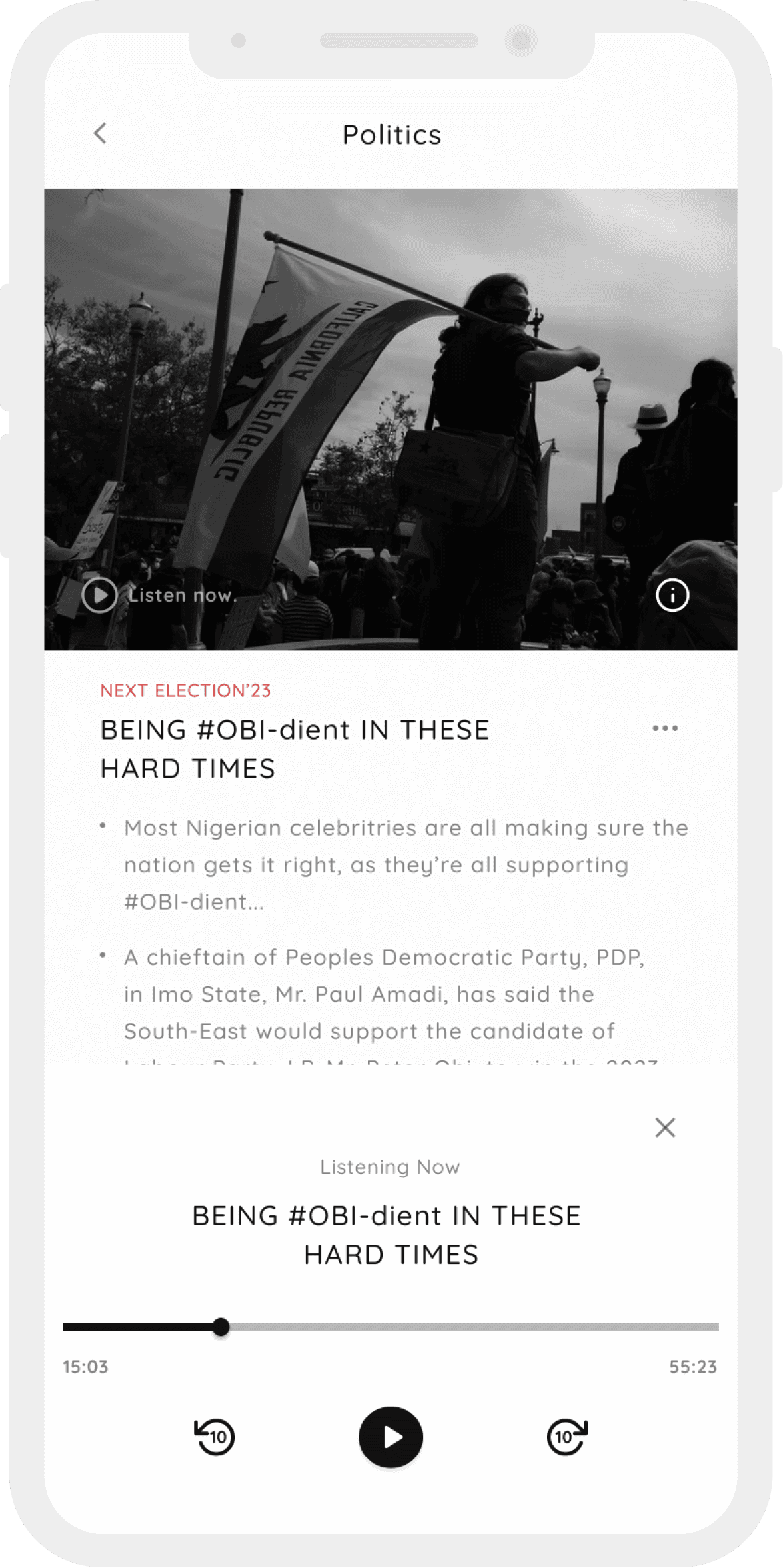
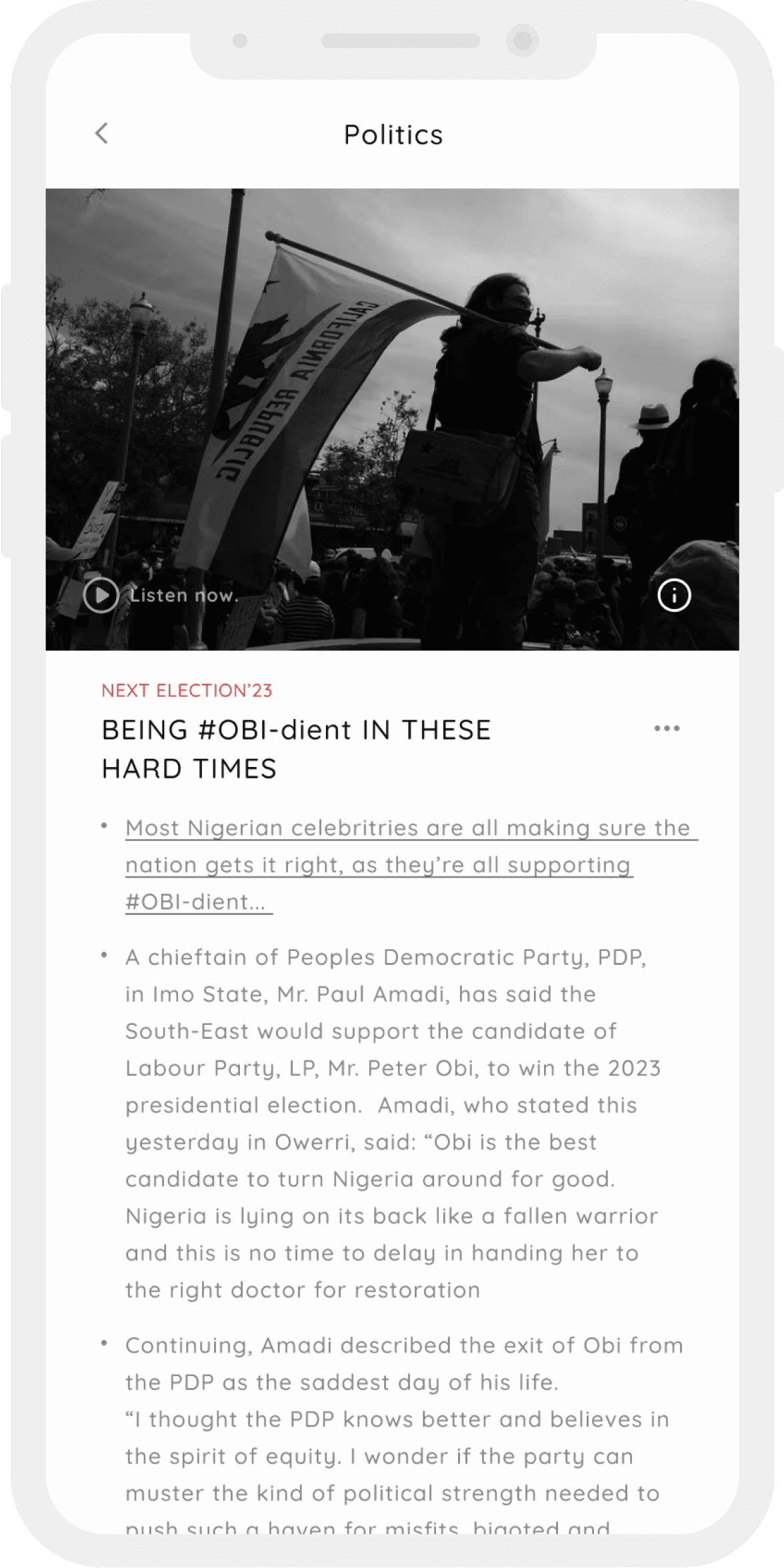
Adaptability:
Just as there are music apps that one could listen to a song and read the song lyrics at the same time, there is
a similar feature on this app too. These screens show the ability to listen to audio news and at the same time, read
the news as they go correspondingly.
Adaptability:
Just as there are music apps that one could listen
to a song and read the song lyrics at the same
time, there is a similar feature on this app too.
These screens show the ability to listen to audio
news and at the same time, read the news as they
go correspondingly.
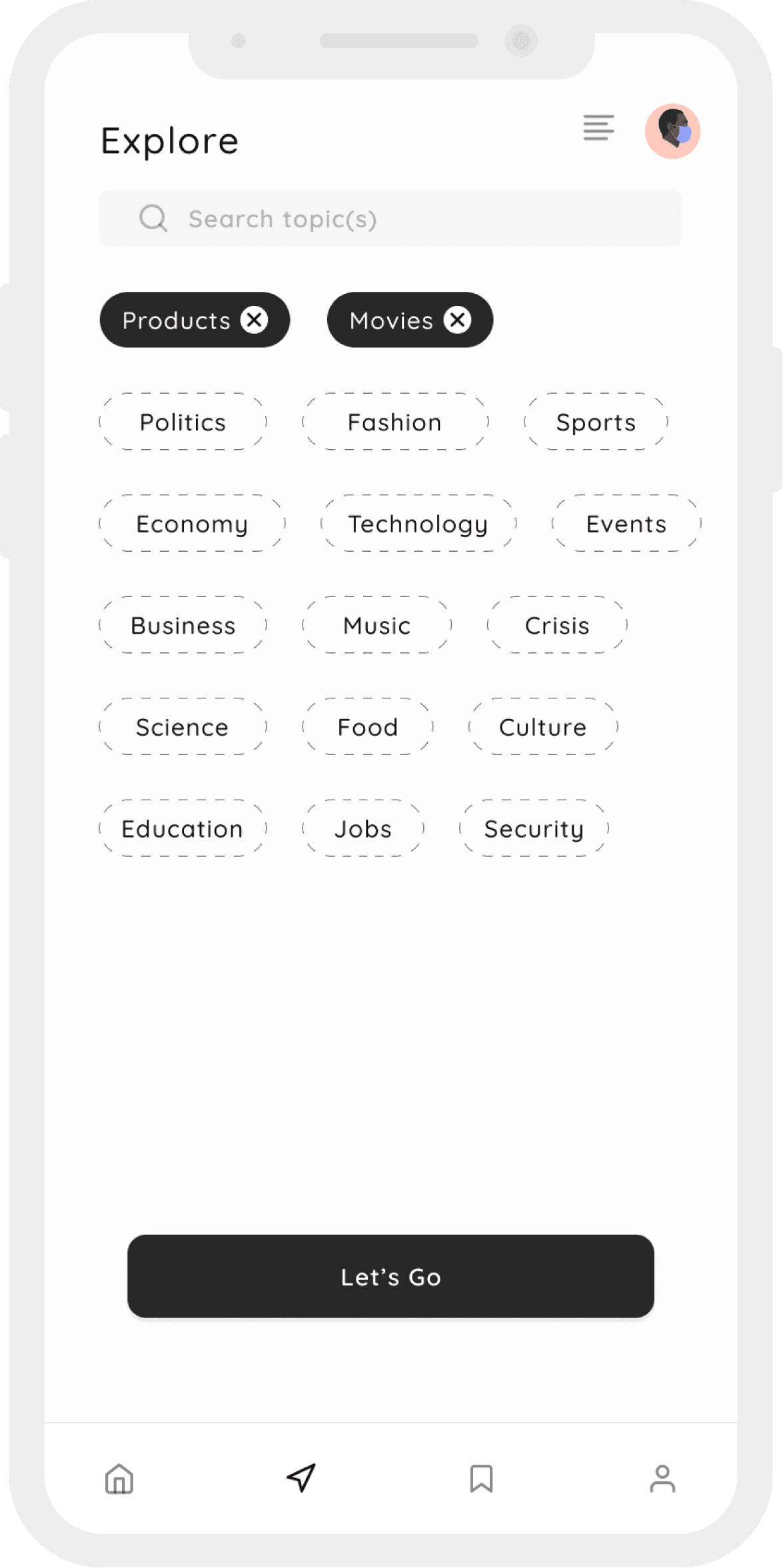
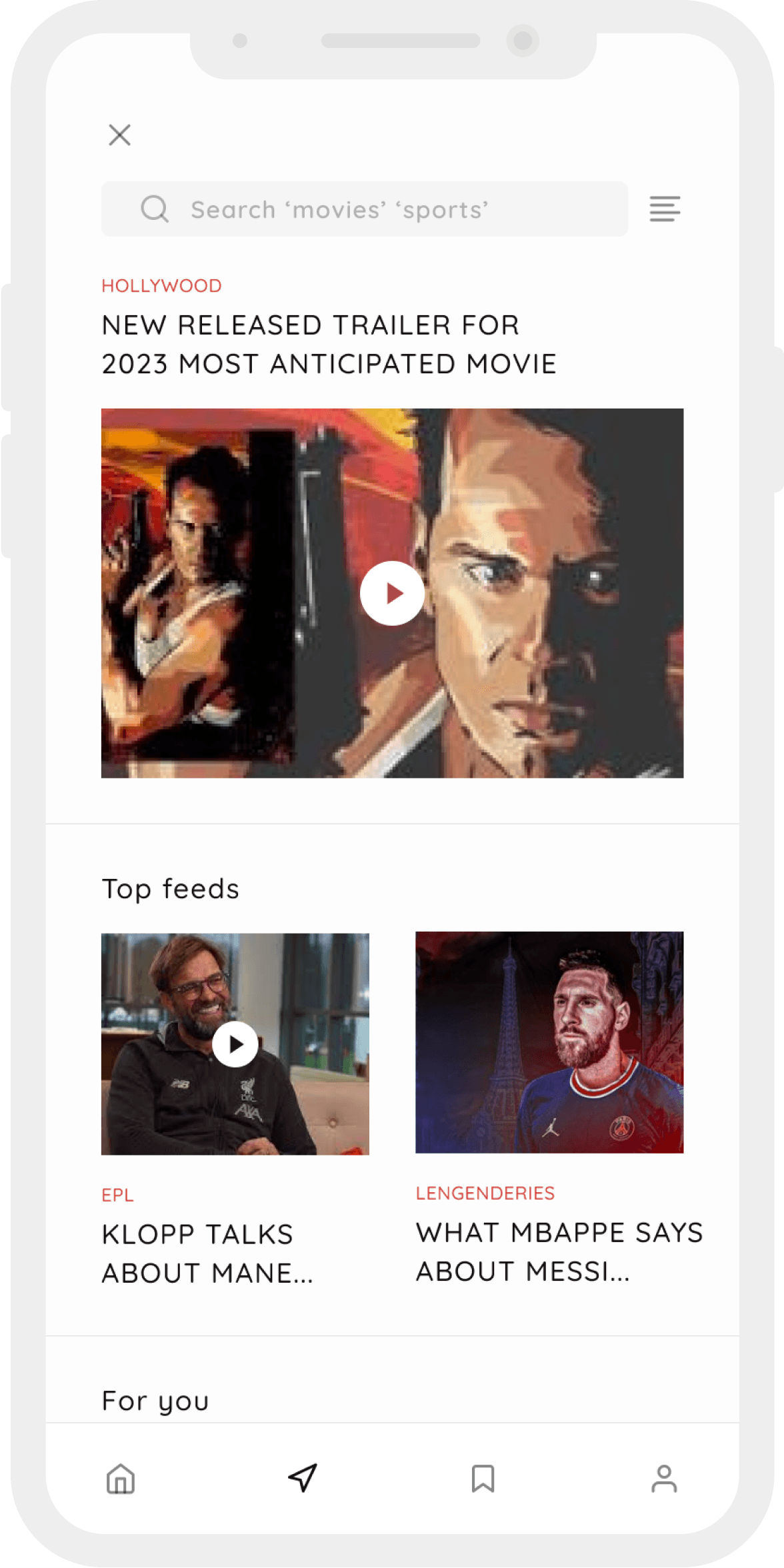
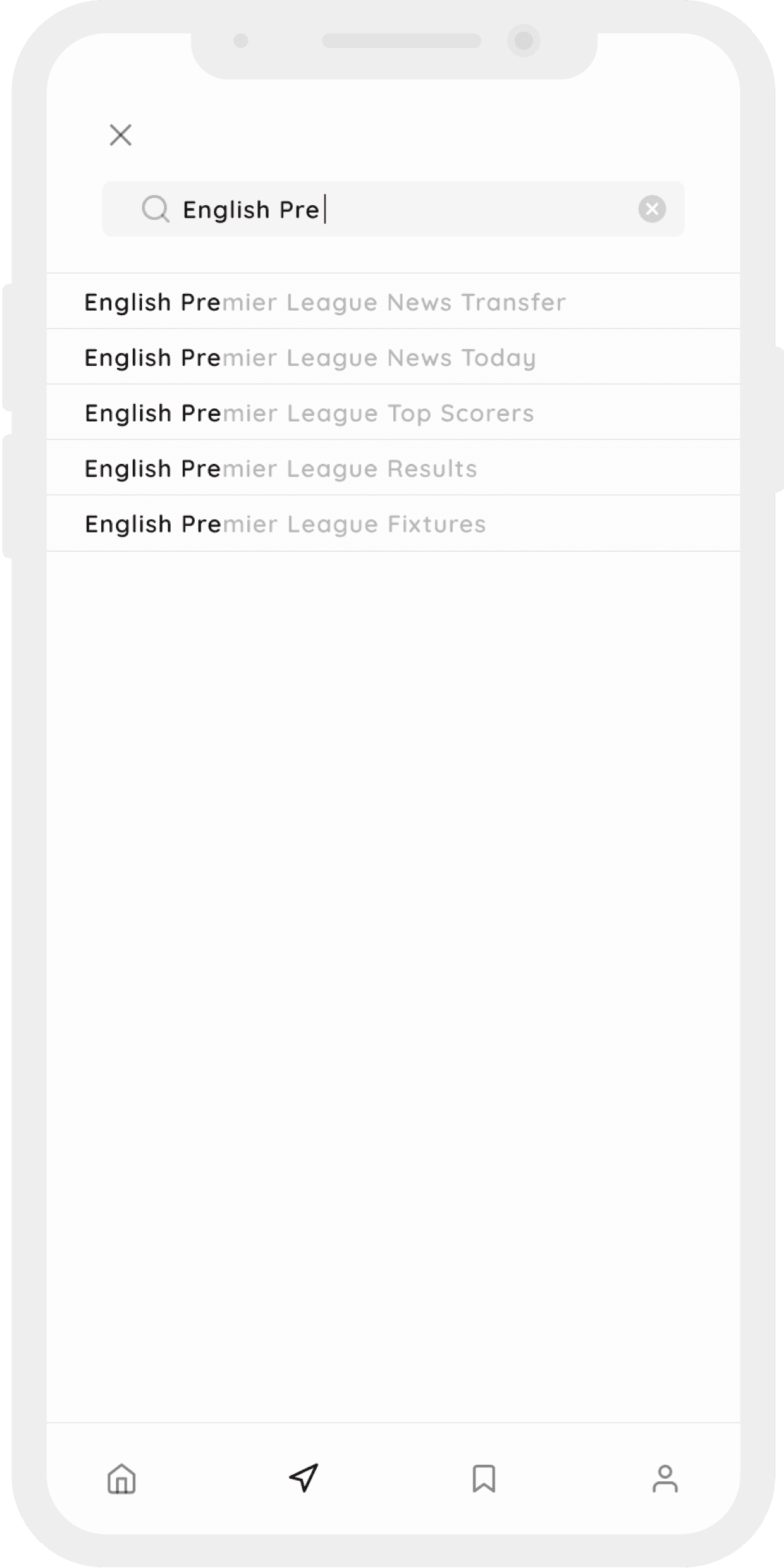
Explore:
The explore tab is meant for browsing users' current topics of interest, and the newly selected topics automatically
add up to the previously selected topics. Also, users could search for any topic they are presently interested in
and ingress it just for the moment.
Explore:
The explore tab is meant for browsing users'
current topics of interest, and the newly
selected topics automatically add up to the
previously selected topics. Also, users could search
for any topic they are presently interested in and
ingress it just for the moment.
Shortcuts:
As previously mentioned, one of the product goals is the ability to re-access news, even after a while. So, I designed
a bookmark feature that allows users to keep some news posts, and users would be able to re-access them quickly,
instead of looking for them.
Shortcuts:
As previously mentioned, one of the product goals
is the ability to re-access news, even after a while.
So, I designed a bookmark feature that allow users
to keep some news posts, and users would be able
to re-access them quickly, instead of looking for
them.
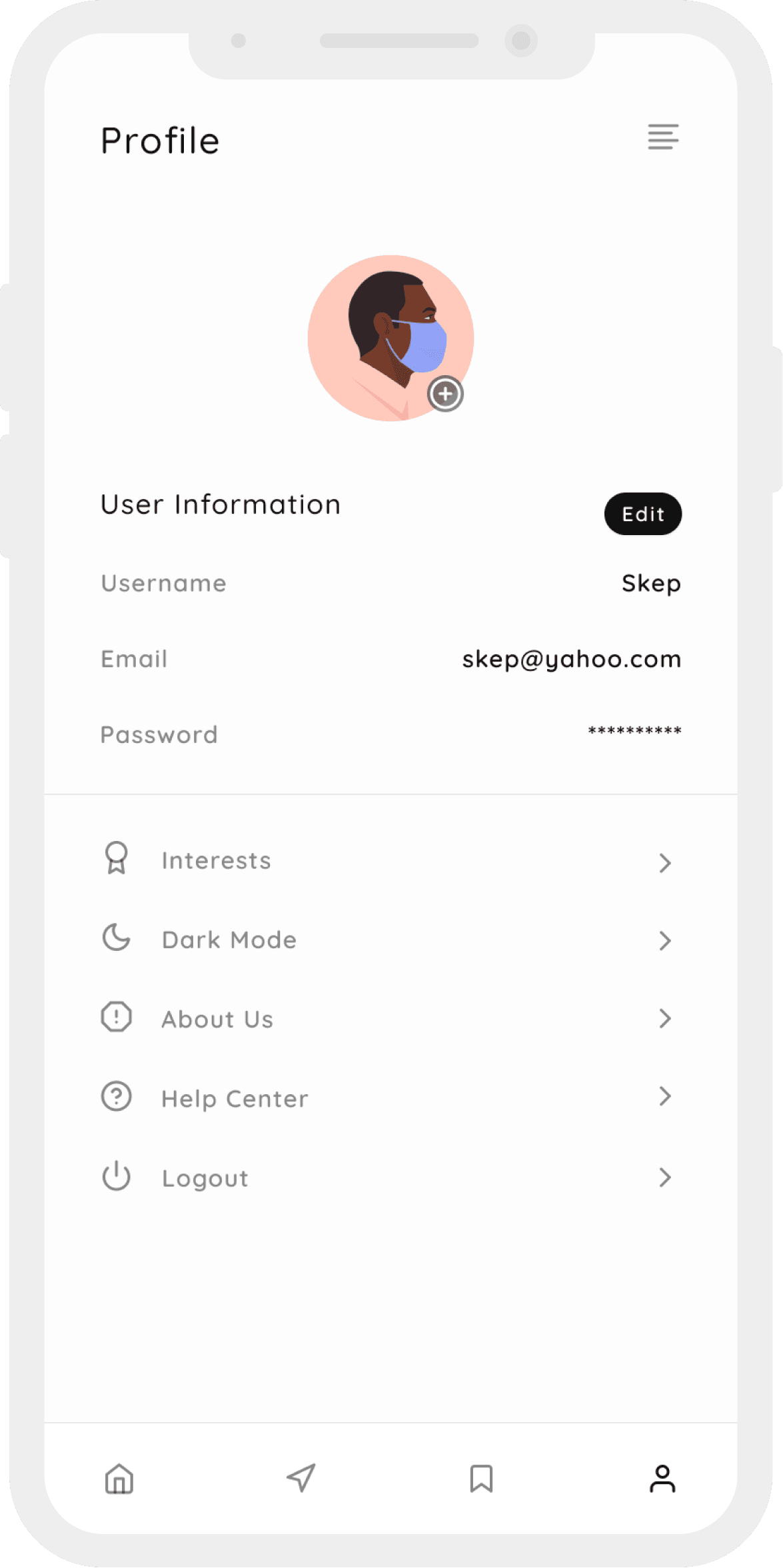
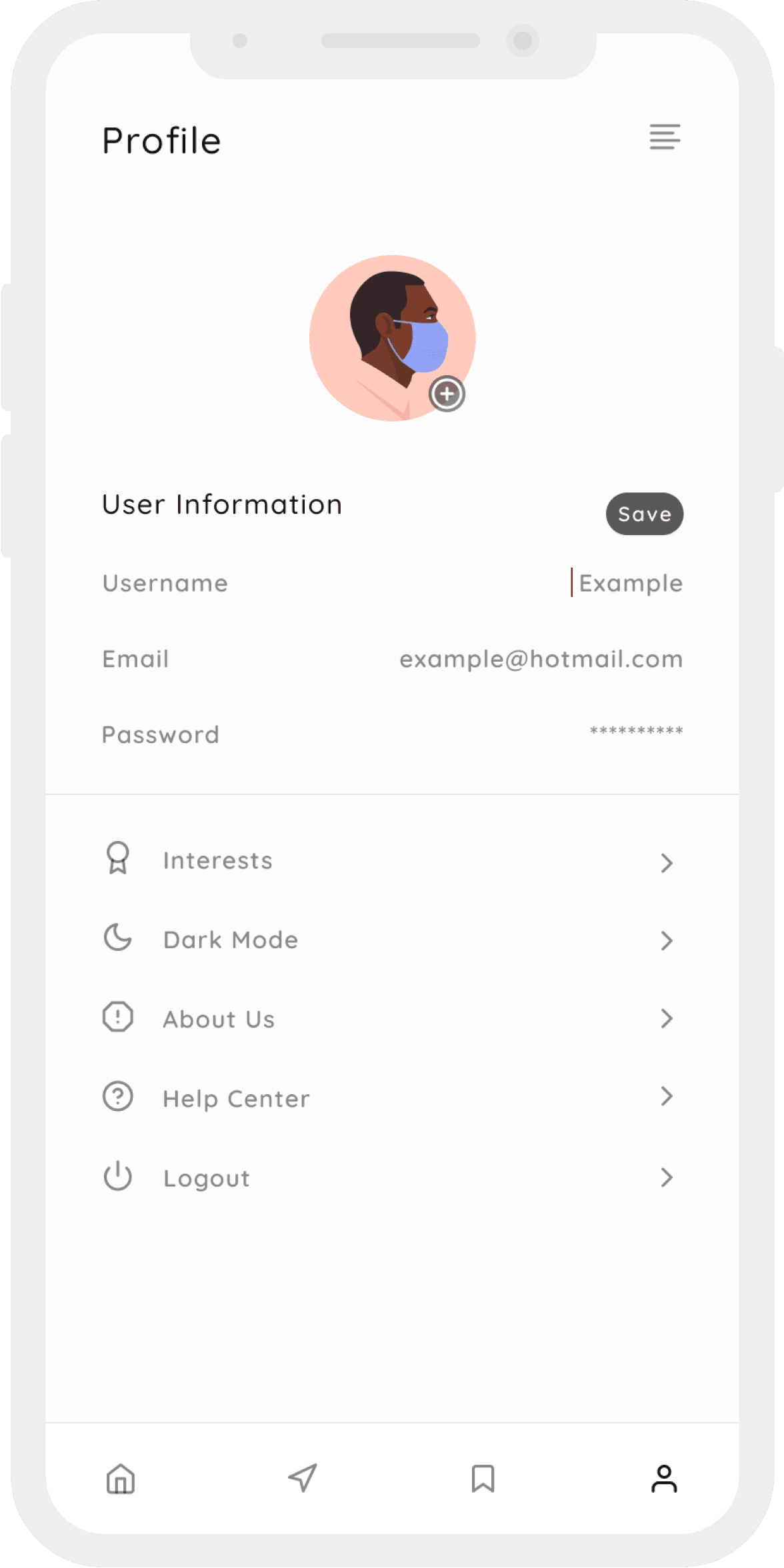
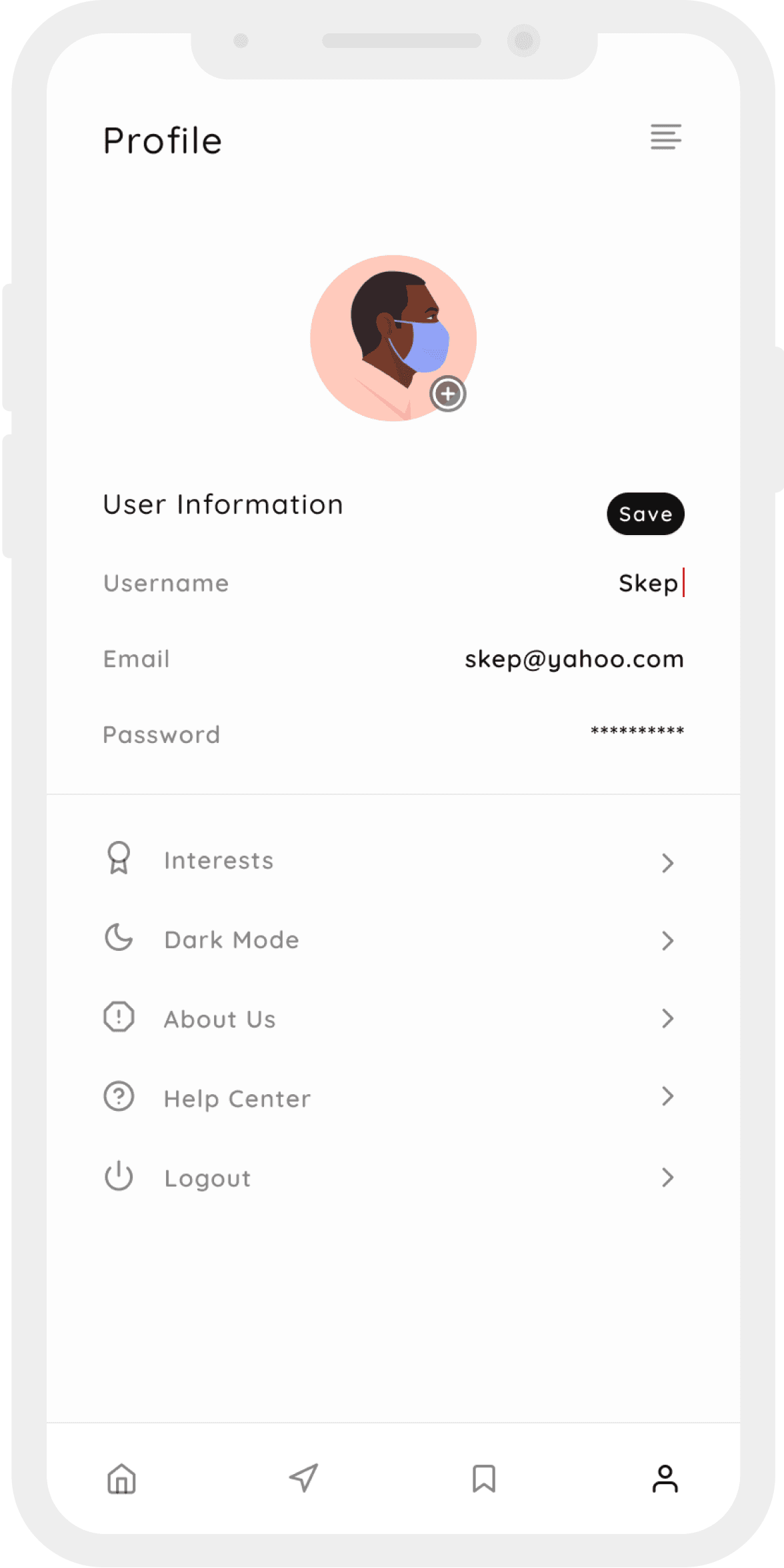
Editable profile:
This was the last part of the UI segment. I designed an adjustable user profile, which means the user’s information
(e.g., username, email, password) can be changed. Lastly, there are other features like logout, dark mode, etc.
Editable profile:
This was the last part of the UI segment. I designed
an adjustable user profile, which means the user’s
information (e.g., username, email, password) can
be changed. Lastly, there are other features like
logout, dark mode, etc.
Testing & Conclusions:
Several user testing iterations were conducted on each final implementation to ensure that it satiated the specific
needs of the users.
The most exciting thing about Scoop is, it resulted as planned, it’s readable, watchable, and listenable, i.e., it connects
the functionalities of Newspapers, Television, and Radio in one platform.
Scoop was also able to suit all the product and users’ goals, as some features were devised, originated, and reached.
Product goals & User goals met!
This iOS app makes people more enthusiastic about consuming news; is a convenient product for users
(as audio is being considered); has a re-accessibility feature, a share feature, and so on.
I’m so delighted I was able to draw up a layout of this project and was able to meet all objectives.
Also, I learned a few new things, gained more understanding of research and how to analyze them, and became more
competent in following research ethics paths.
Testing & Conclusions:
Several user testing iterations were conducted on
each final implementation to ensure that it satiated
the specific needs of the users.
The most exciting thing about Scoop is, it resulted
as planned, it’s readable, watchable, and listenable,
i.e., it connects the functionalities of Newspapers,
Television, and Radio in one platform.
Scoop was also able to suit all the product and
users’ goals, as some features were devised,
originated, and reached. Product goals & User
goals met!
This iOS app makes people more enthusiastic about
consuming news; is a convenient product for users
(as audio is being considered); has a re-accessibility
feature, a share feature, and so on.
I’m so delighted I was able to draw up a layout of this
project and was able to meet all objectives.
Also, I learned a few new things, gained more
understanding of research and how to analyze
them, and became more competent in following
research ethics paths.
Let's Connect
Let's Connect
Get in touch for opportunities or say hi
if you would love to collaborate.
Get in touch for opportunities or say hi
if you would love to collaborate.
Scoop
Role:
UX Designer
Team:
Fawaz Ojomu
(Solo)
Duration:
4 Weeks